



Start your restoration journey with us today
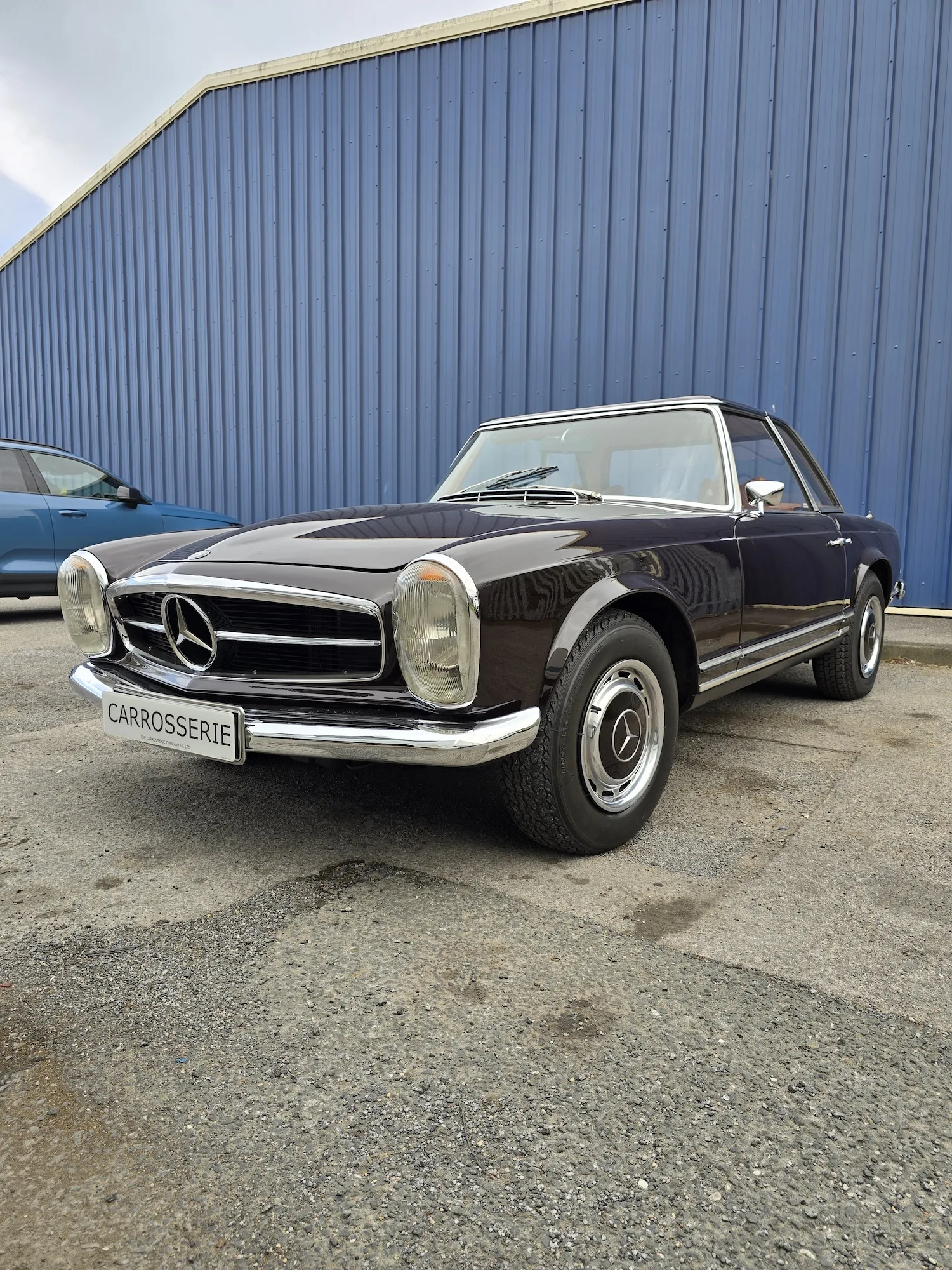
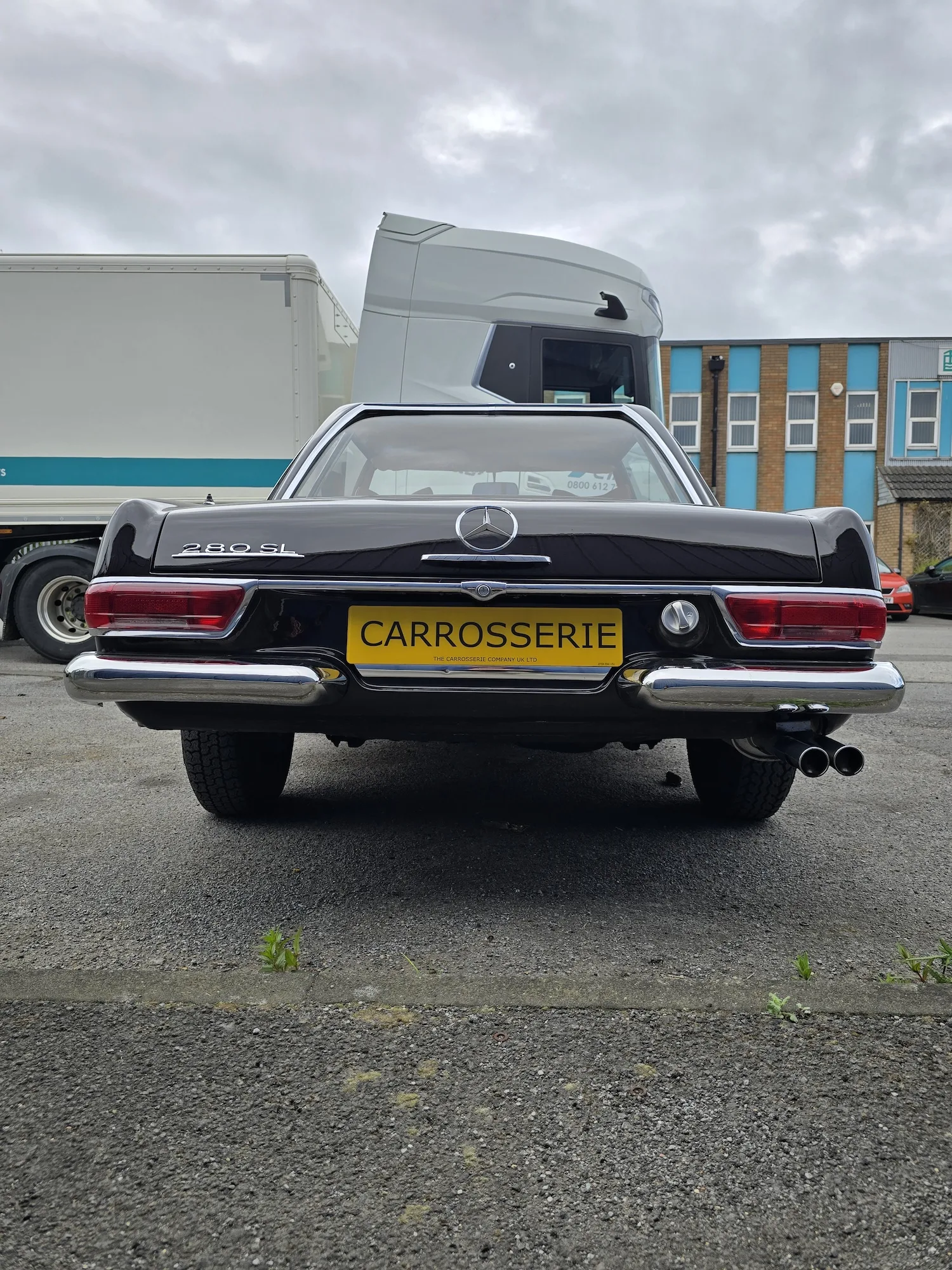
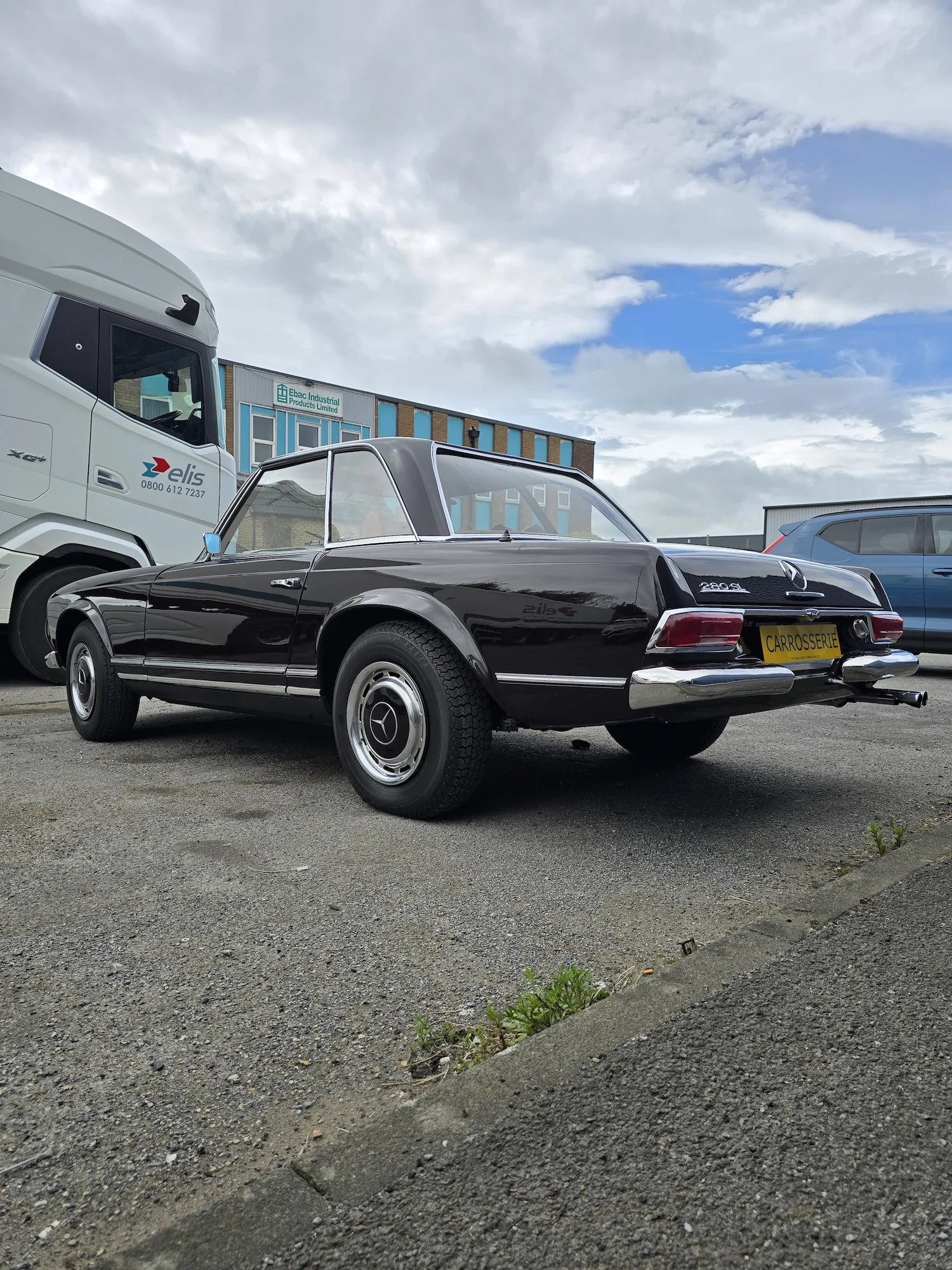
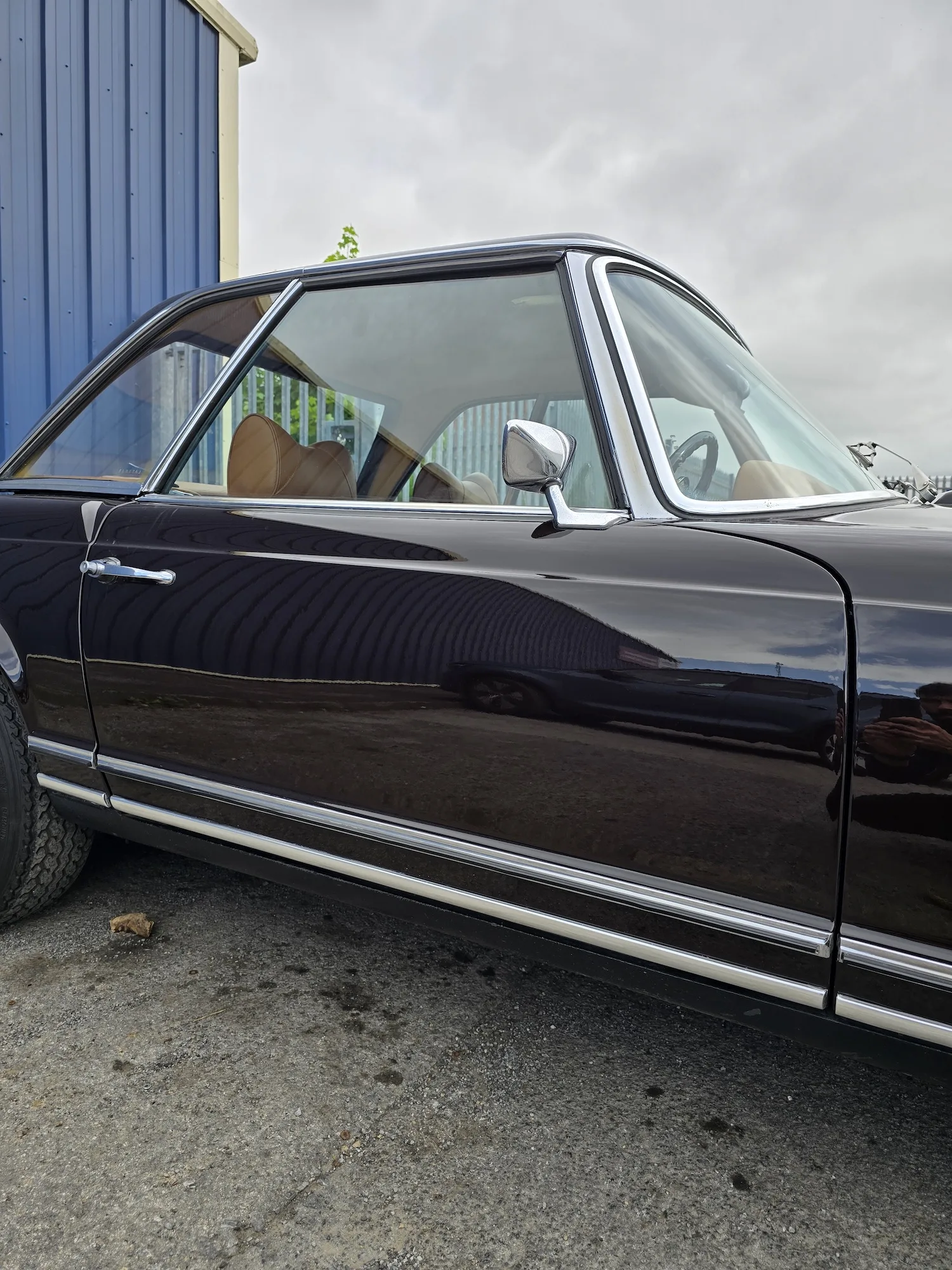
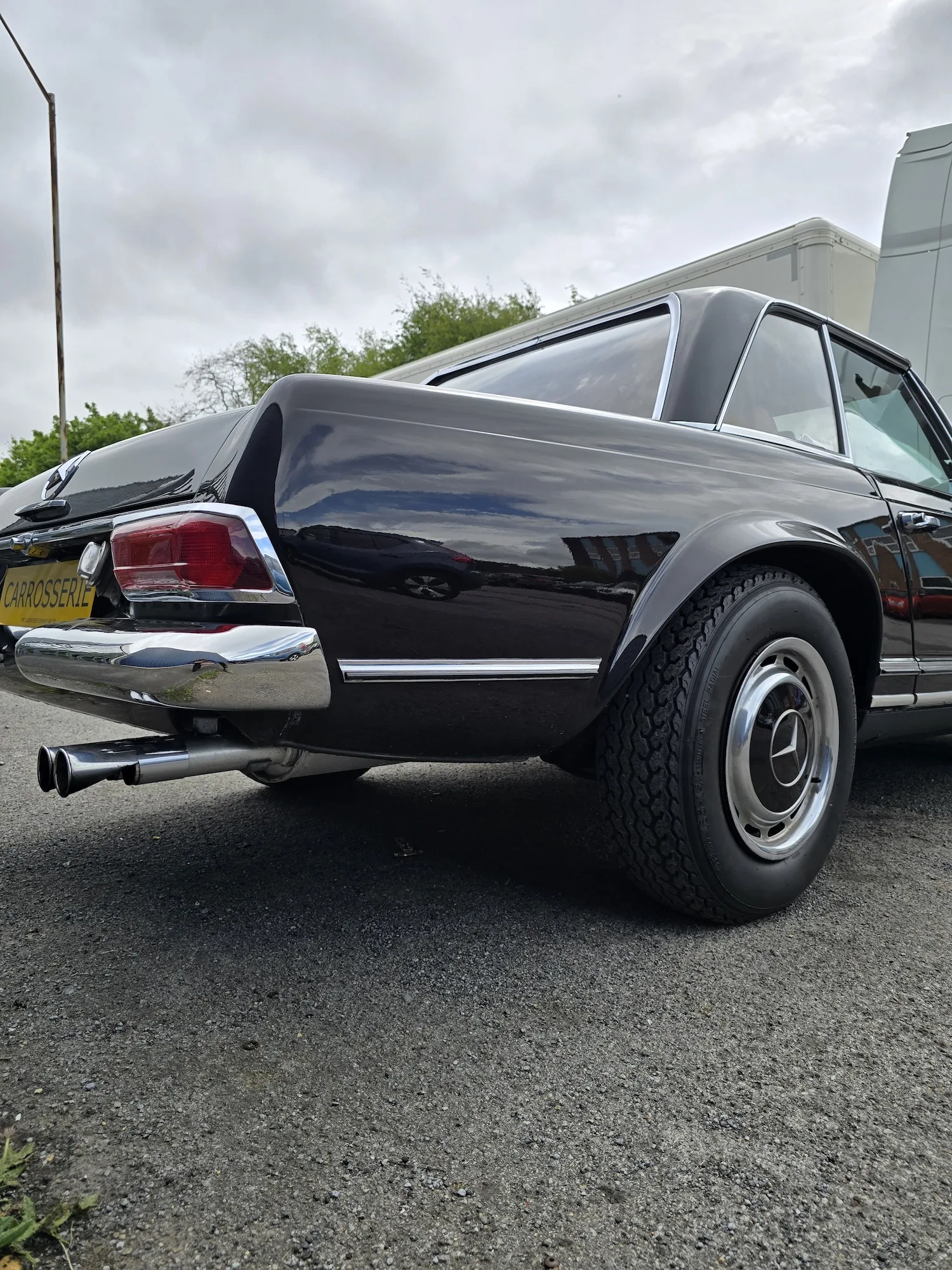
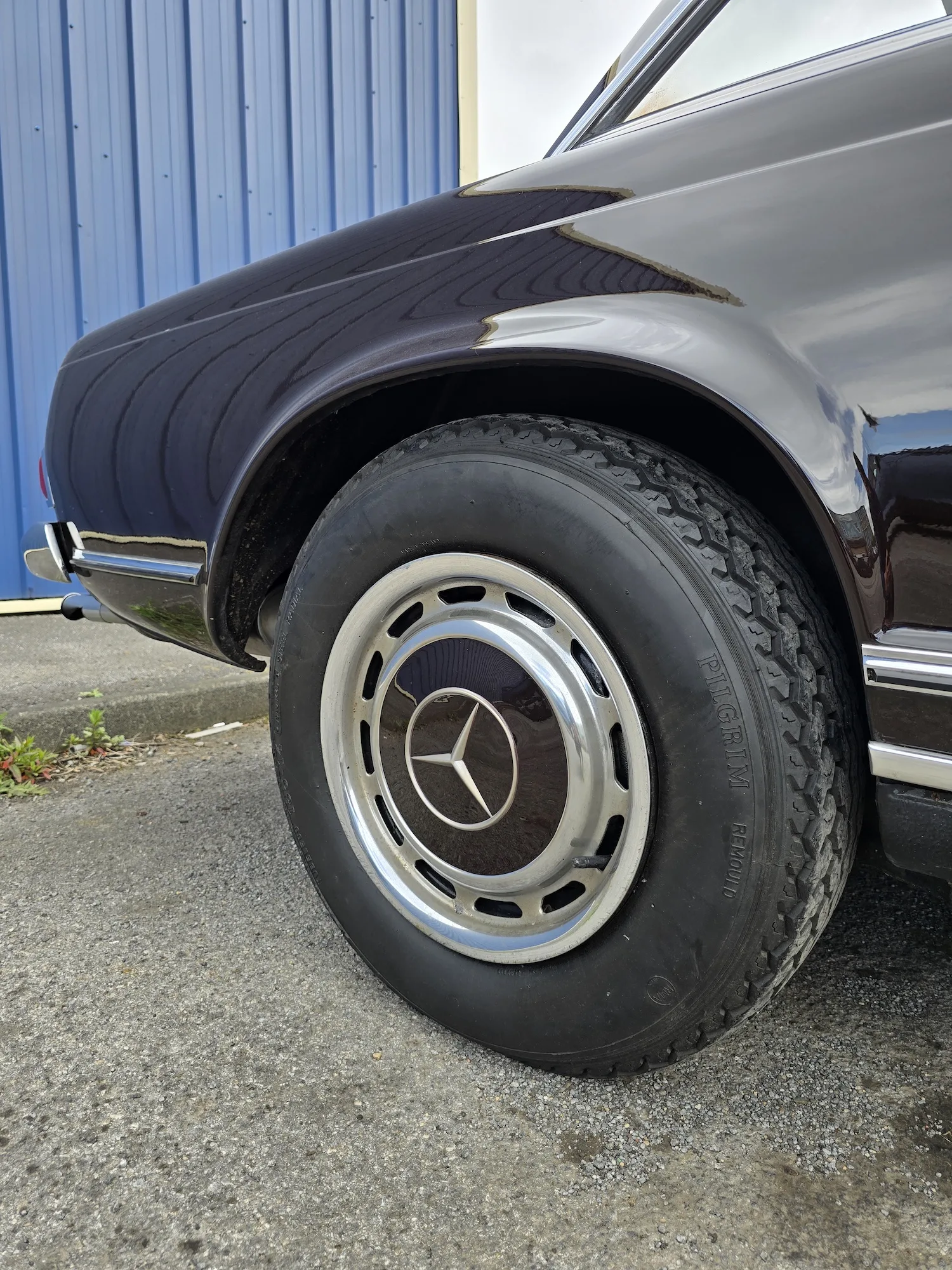
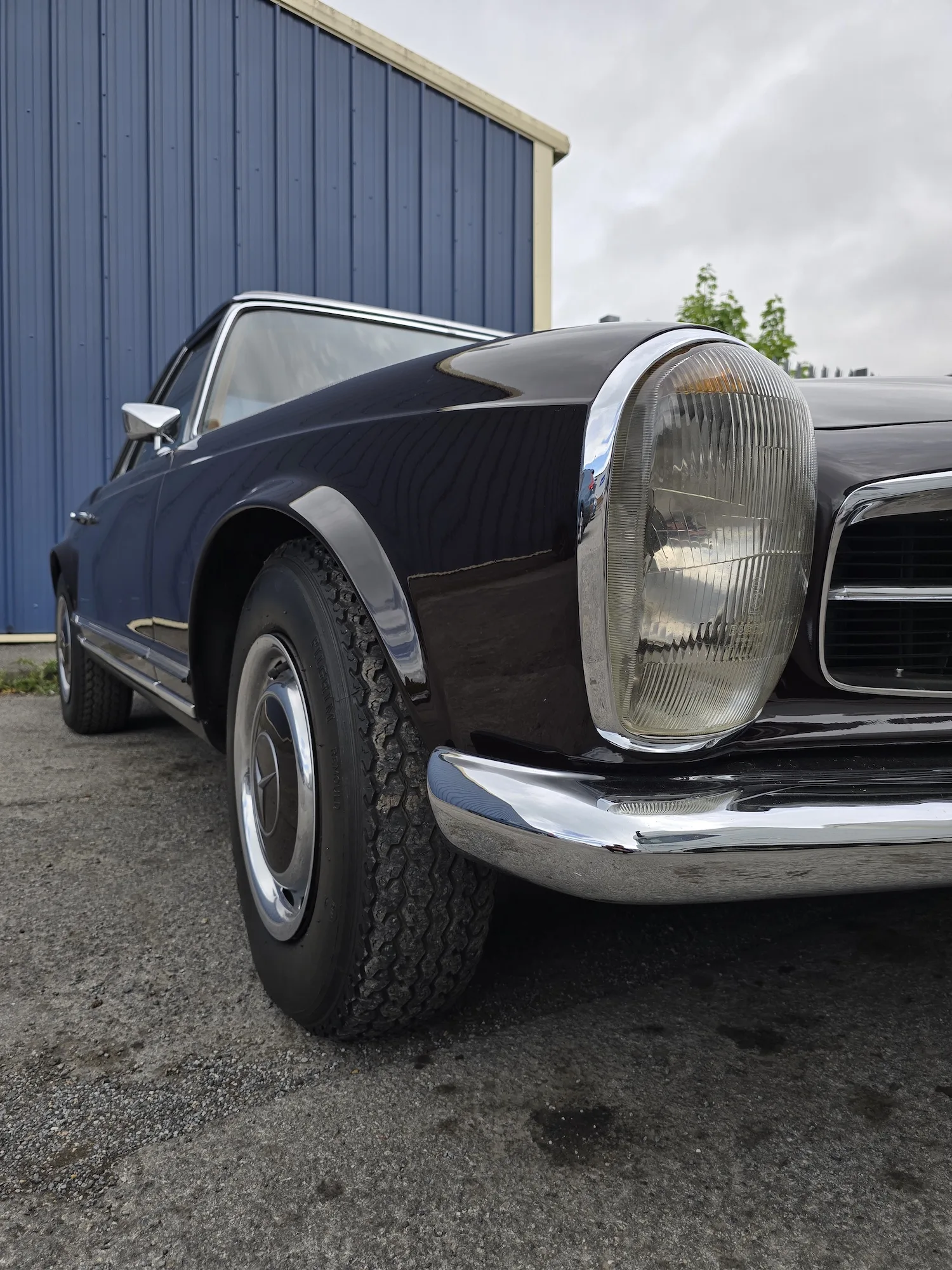
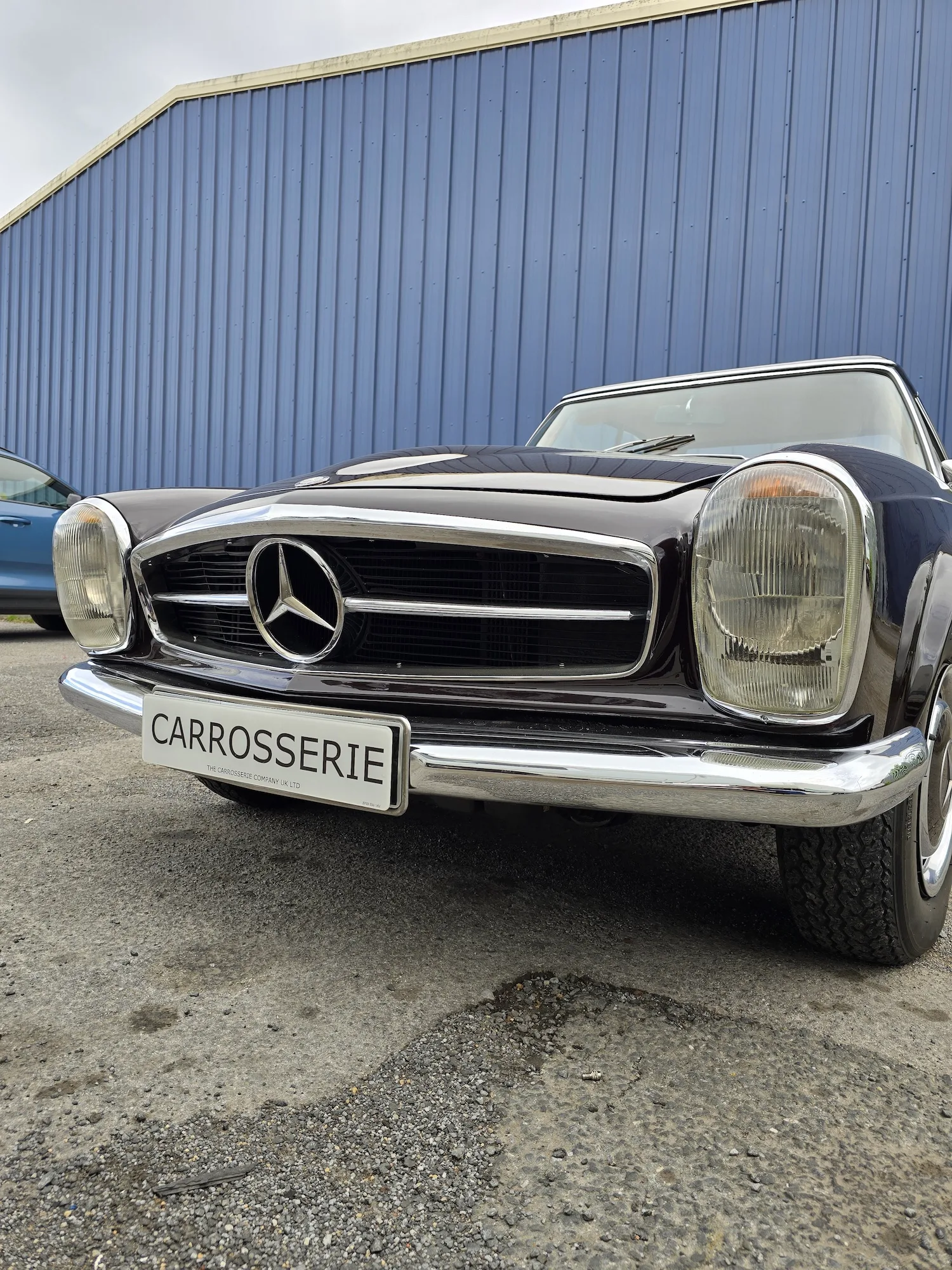
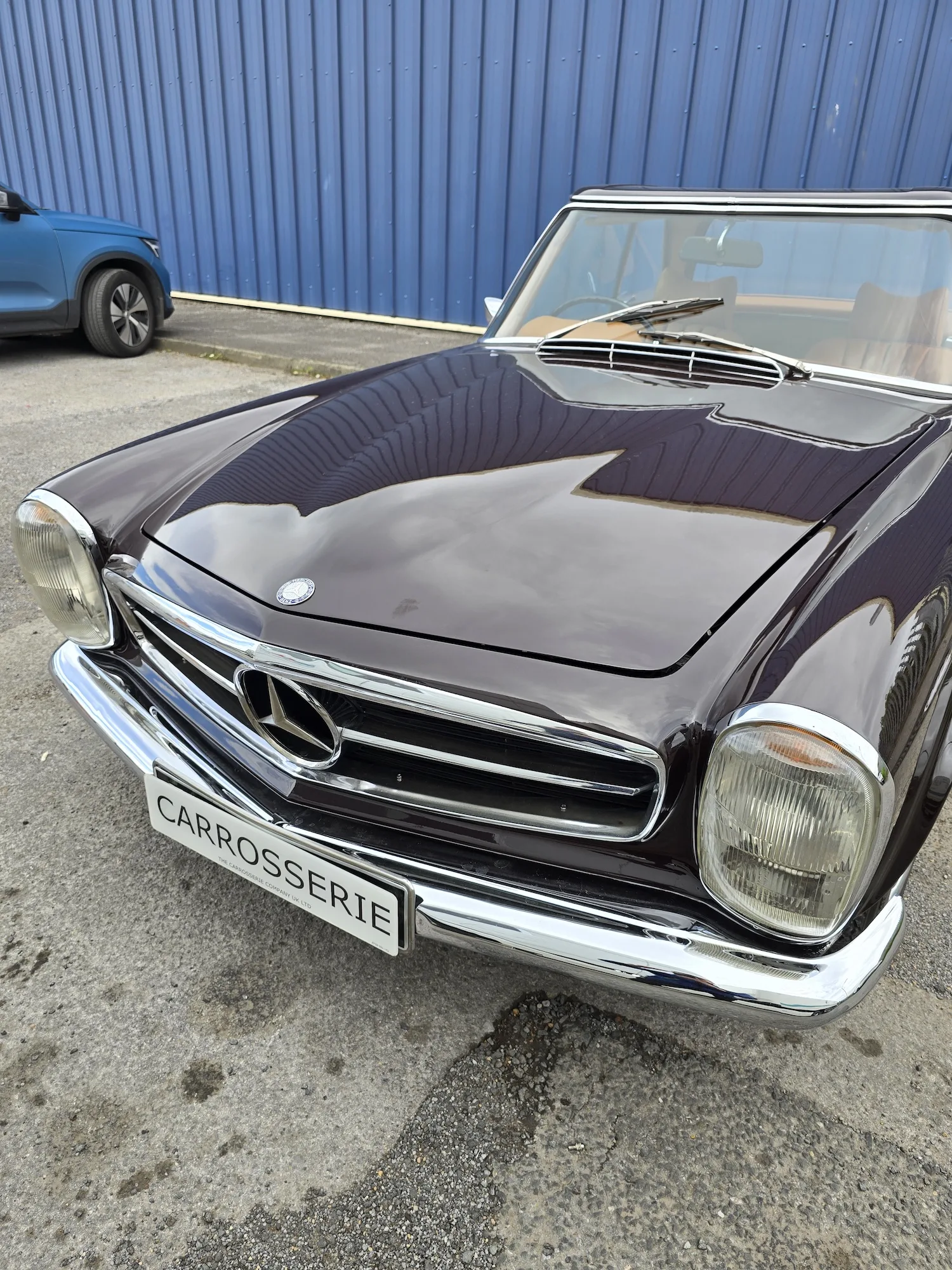
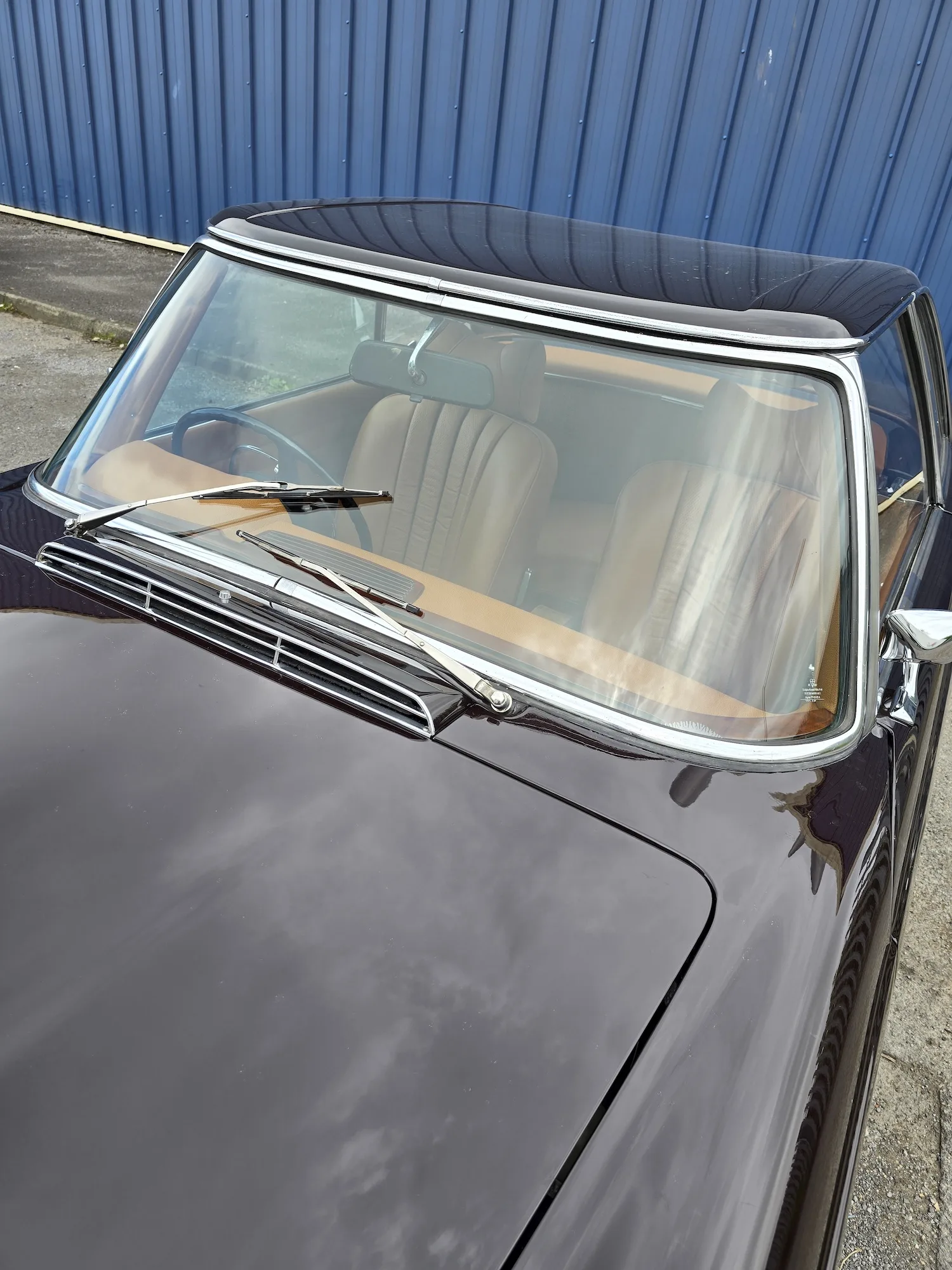
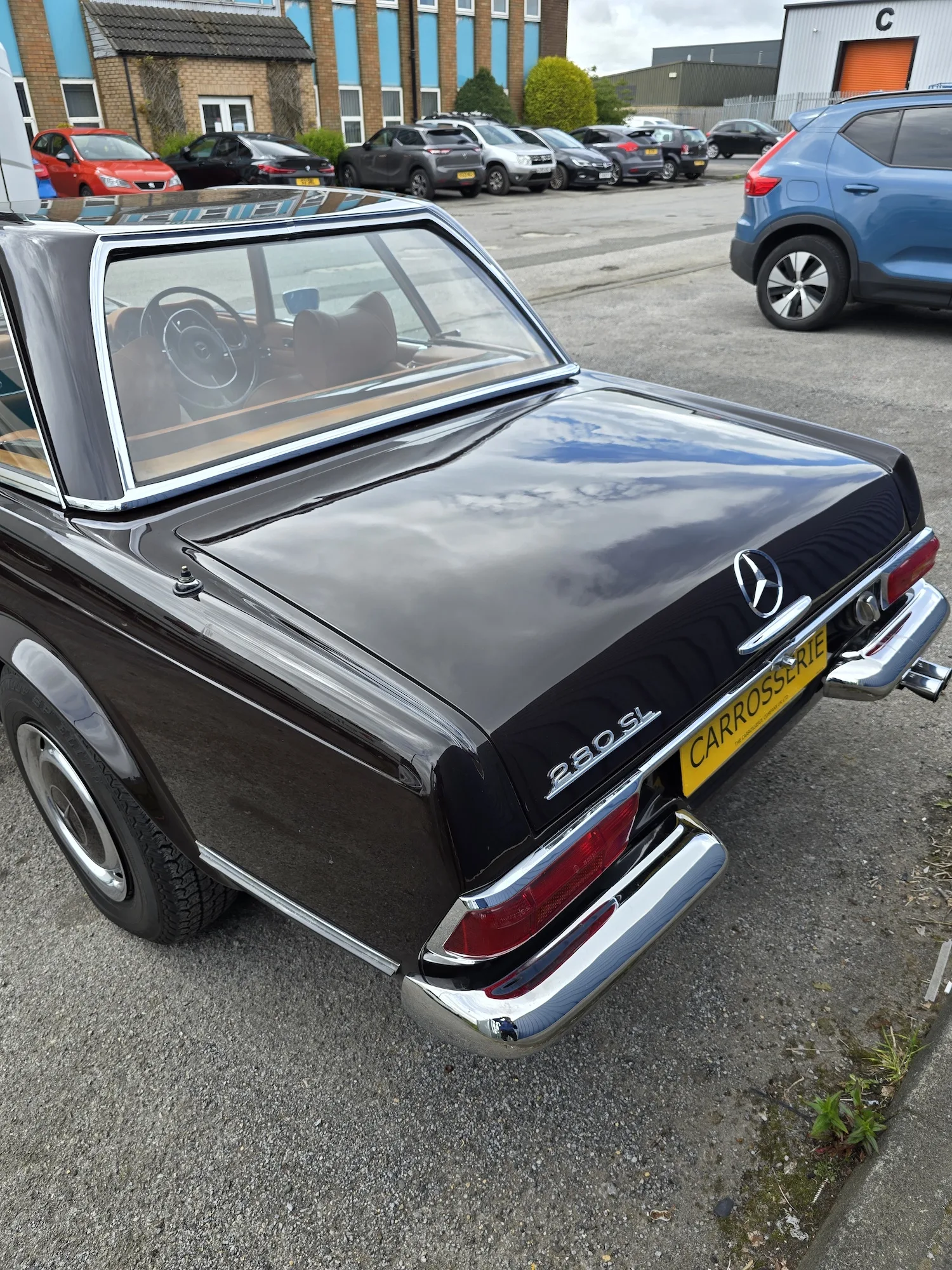
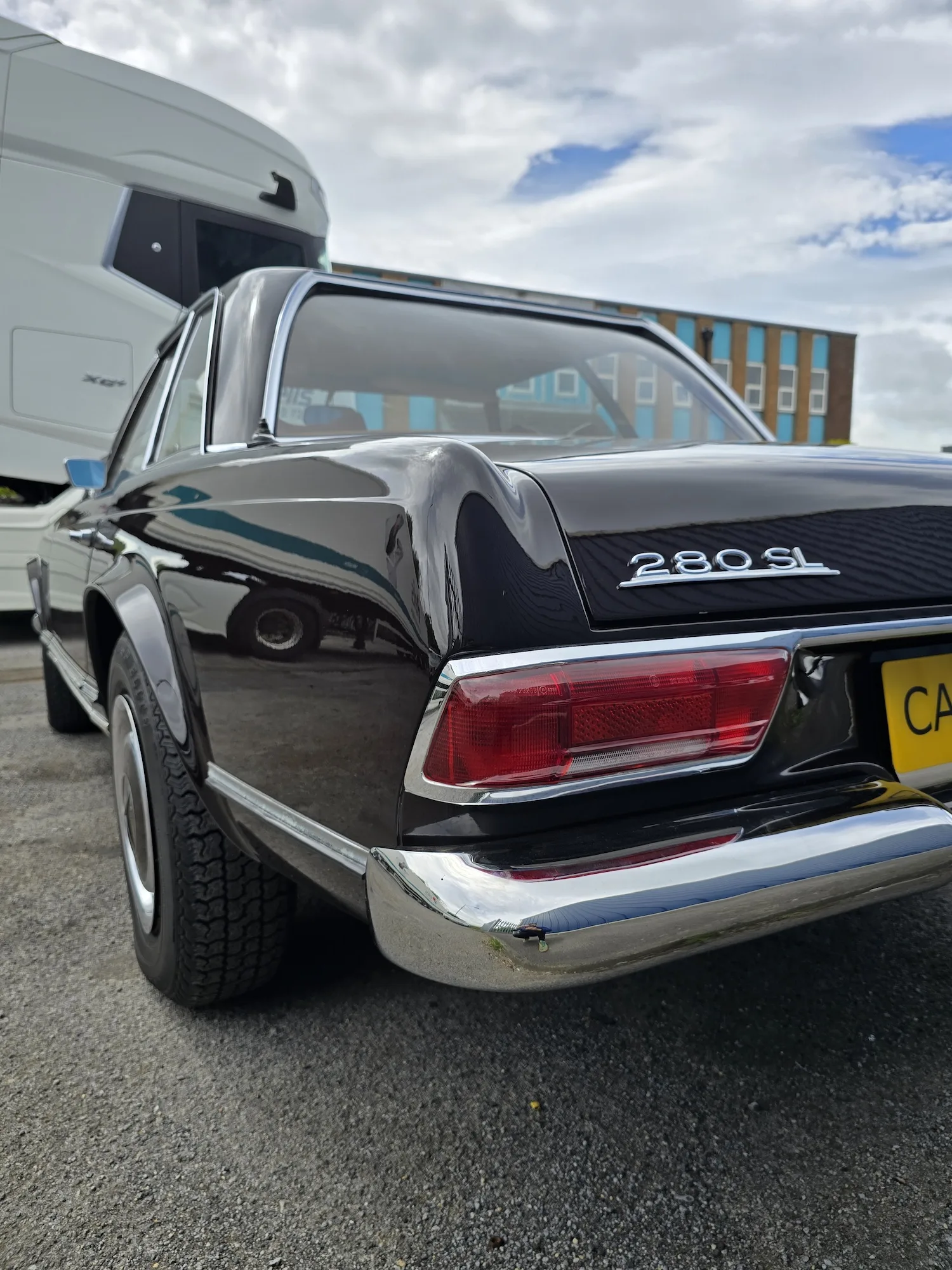
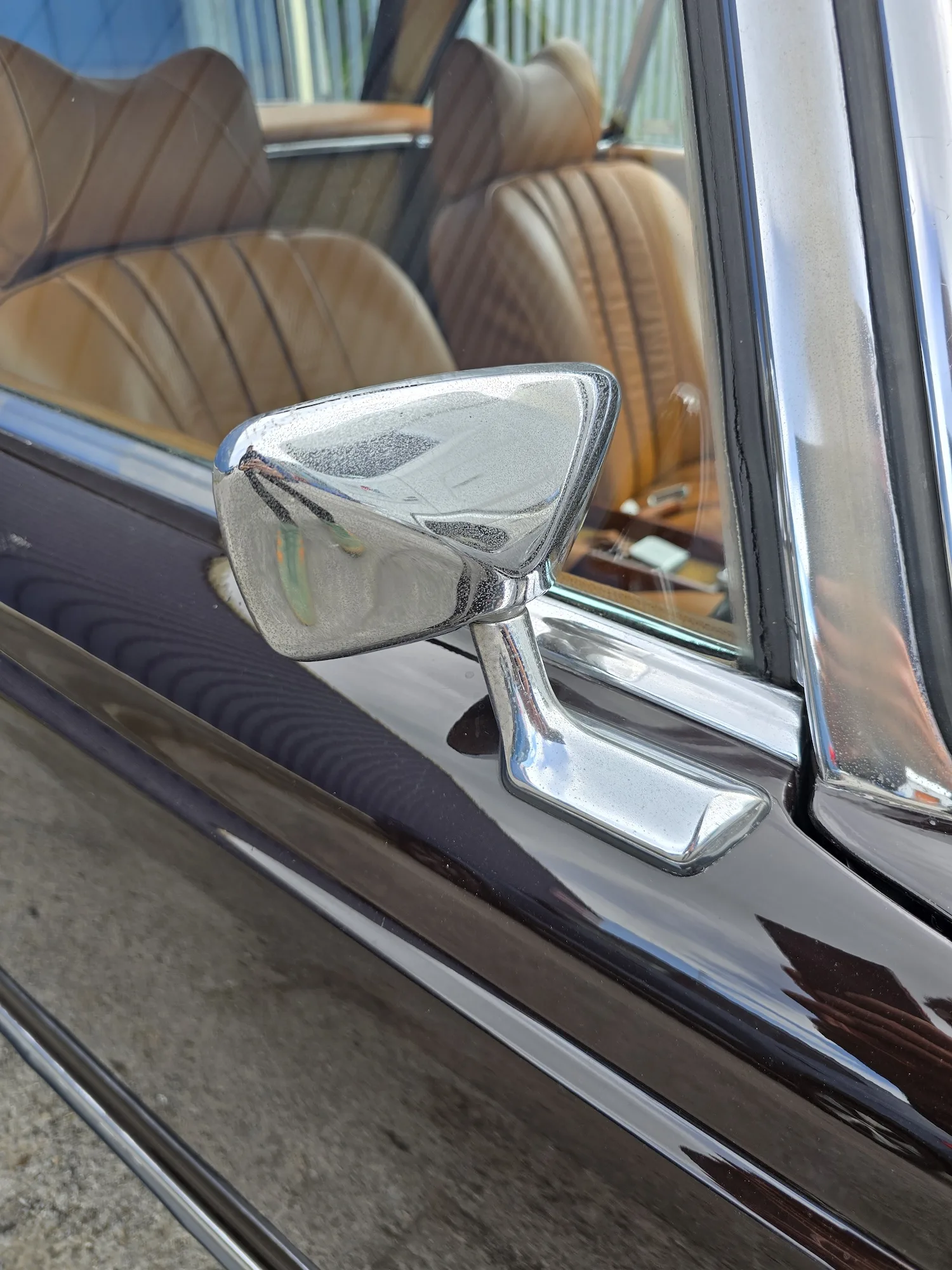
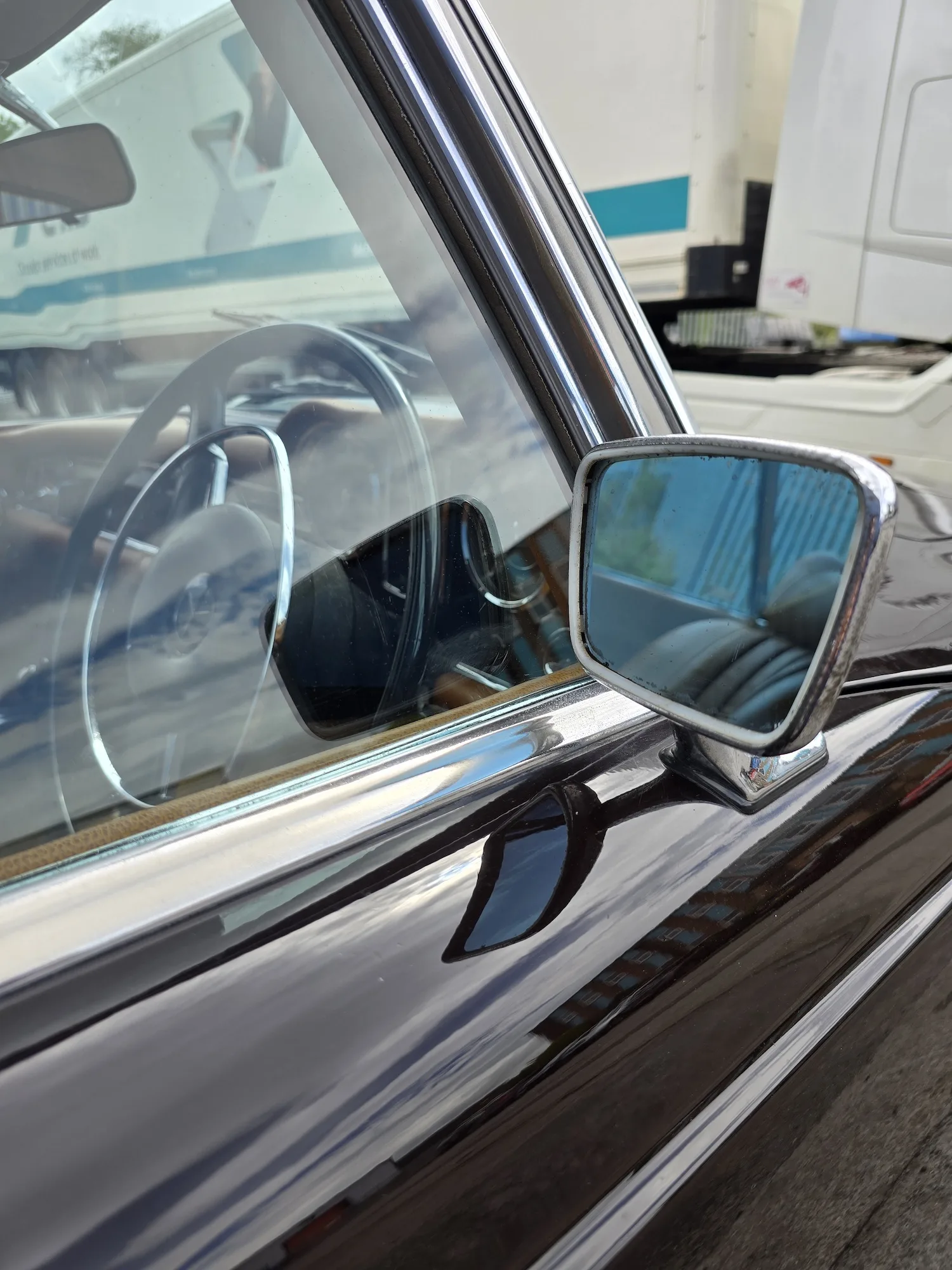
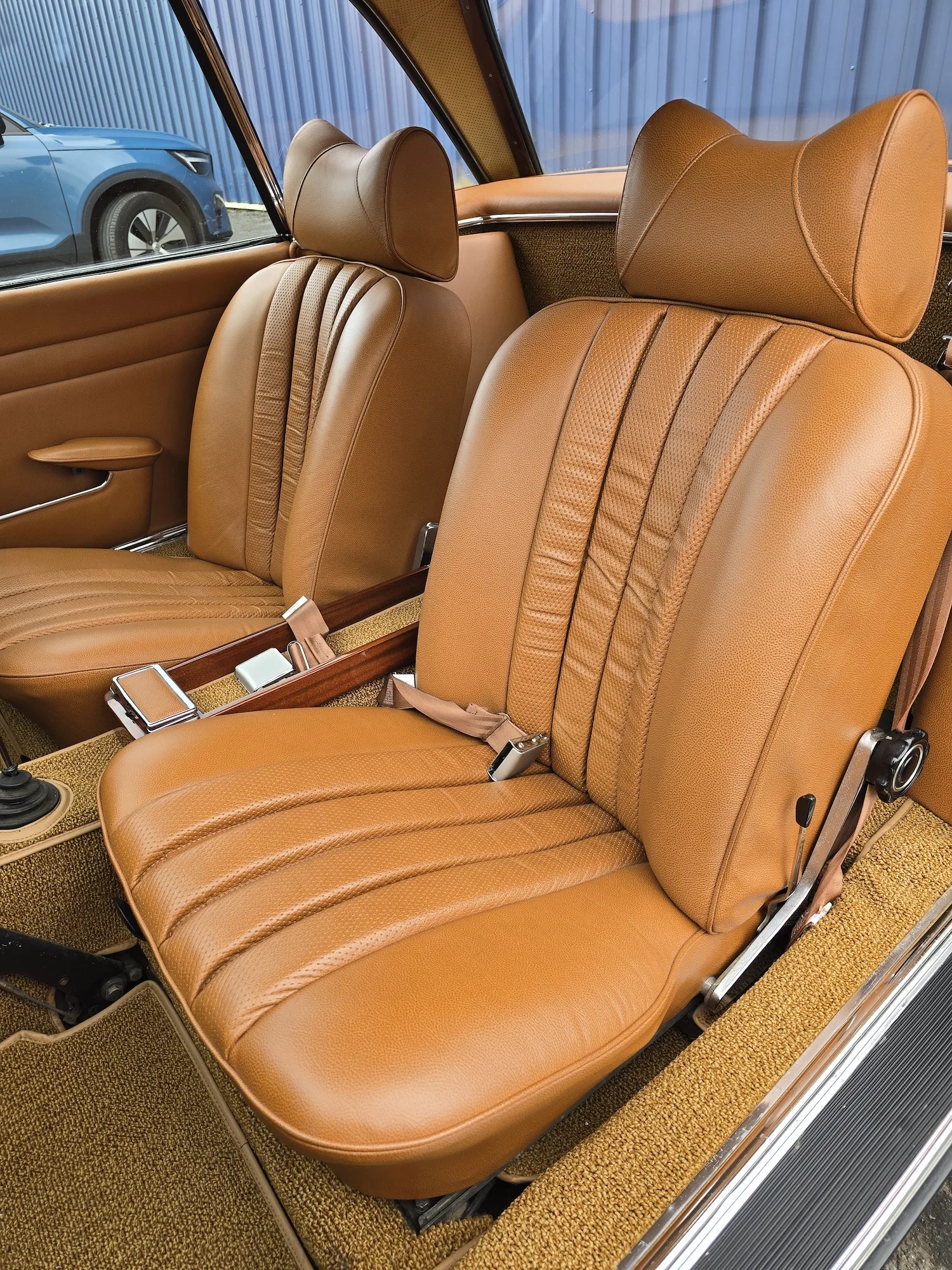
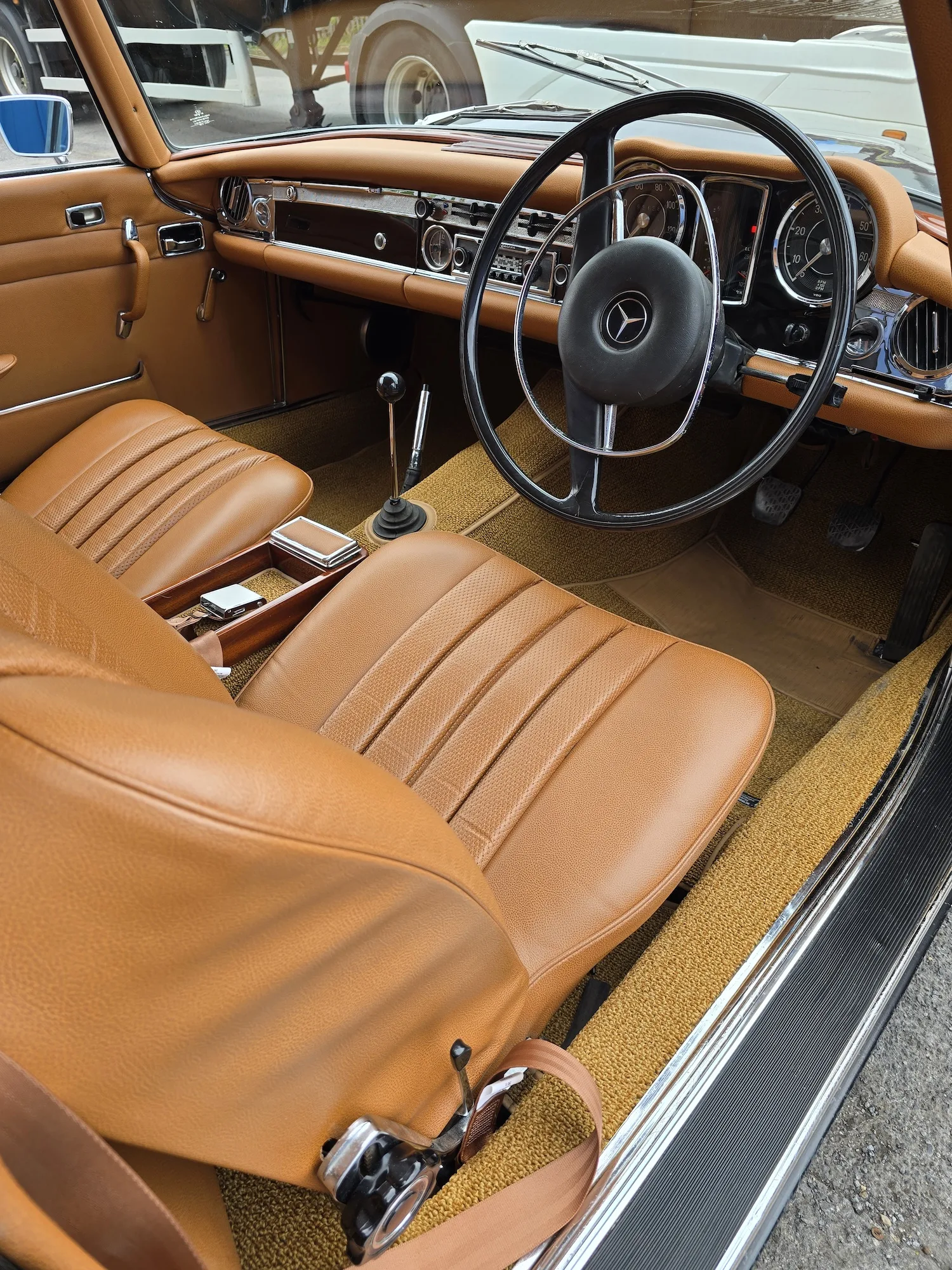
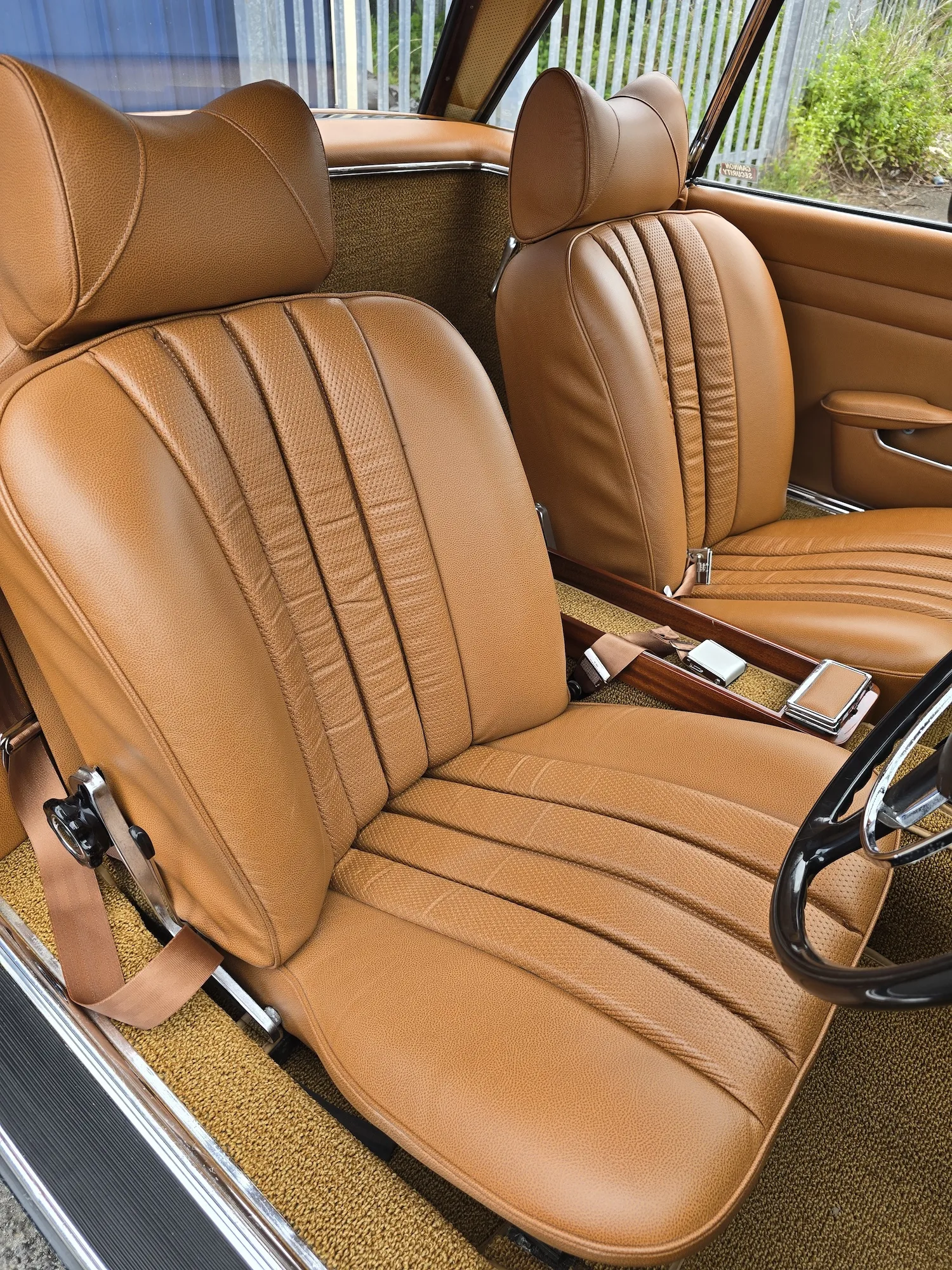
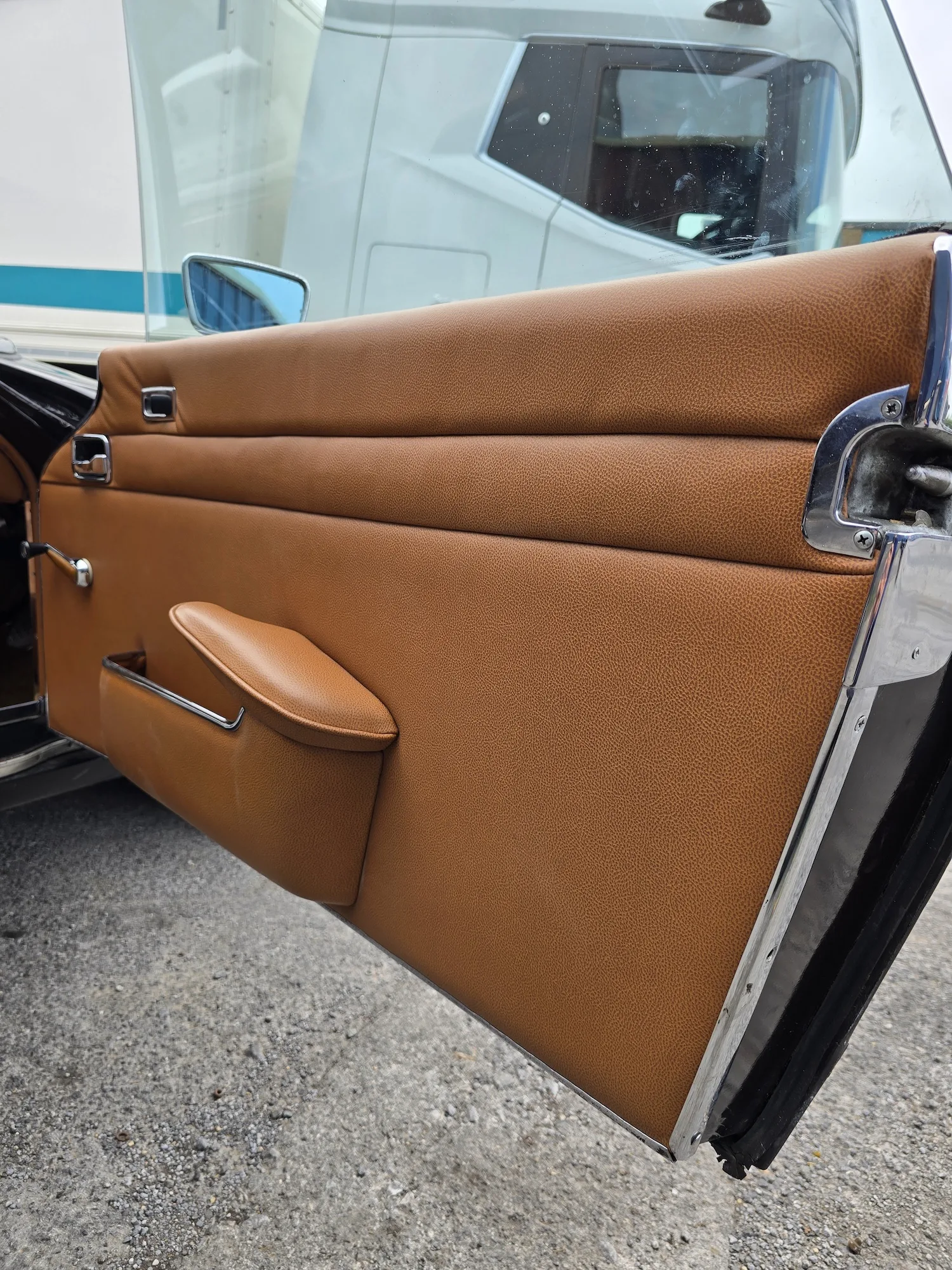
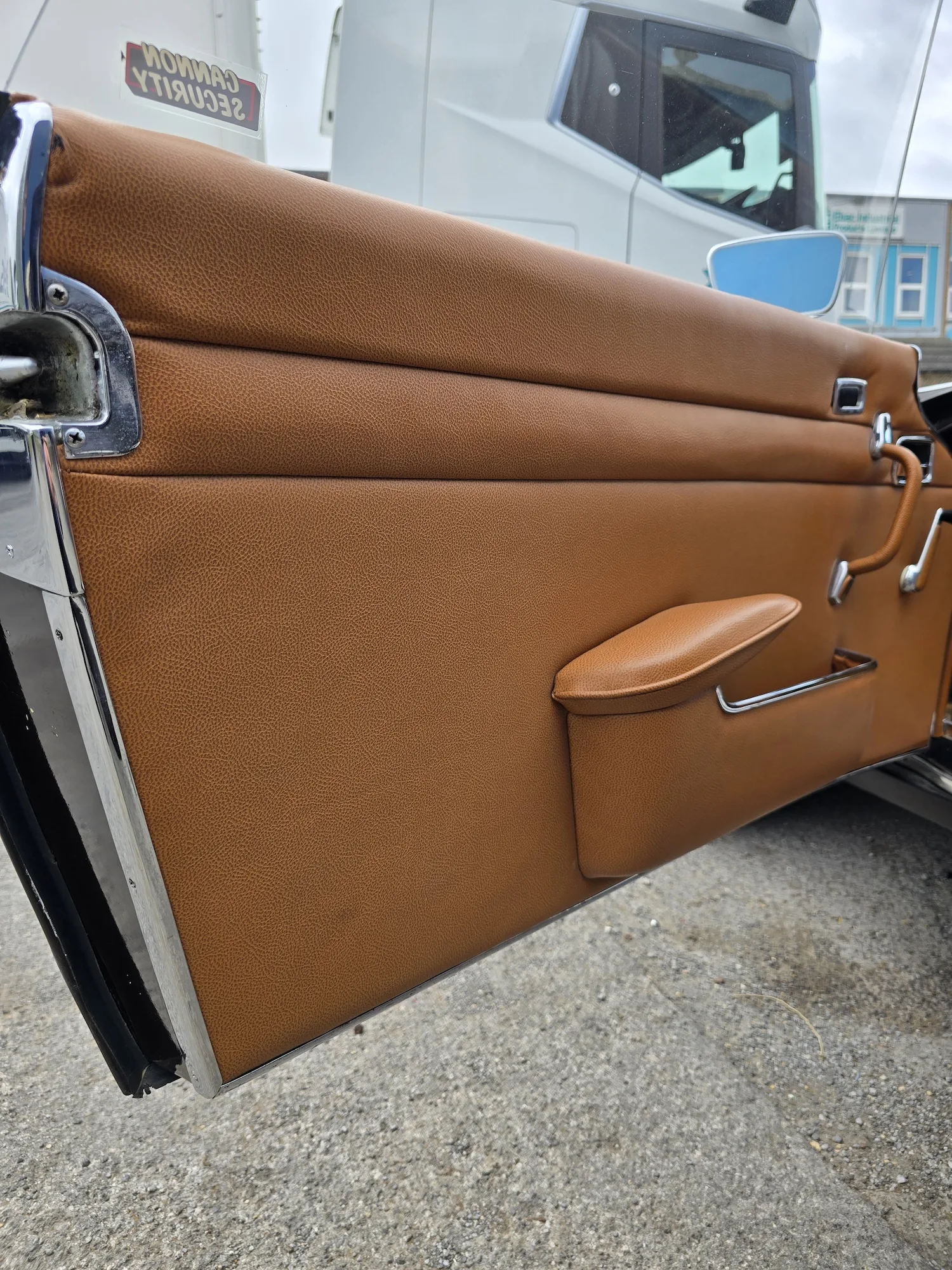
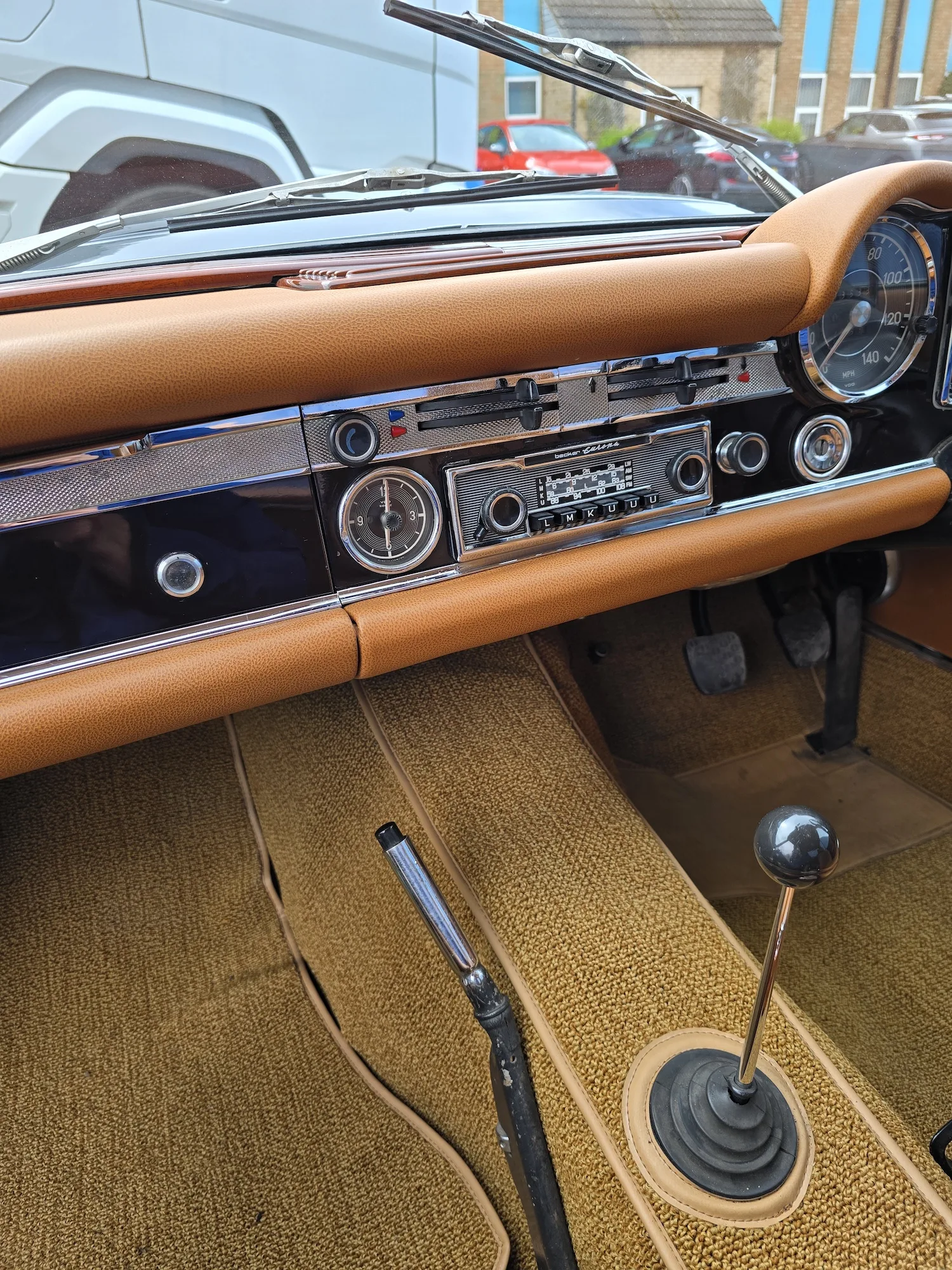
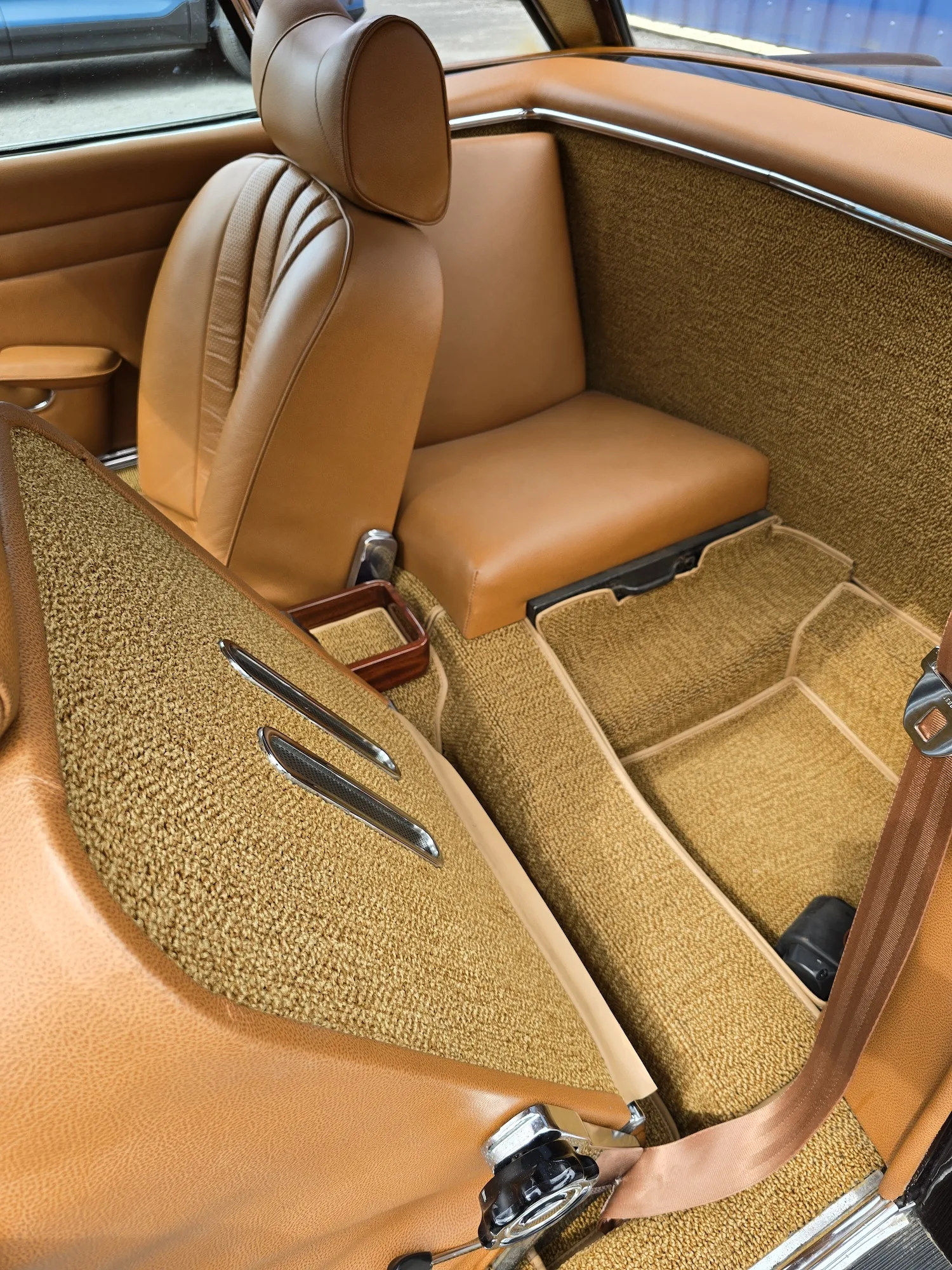
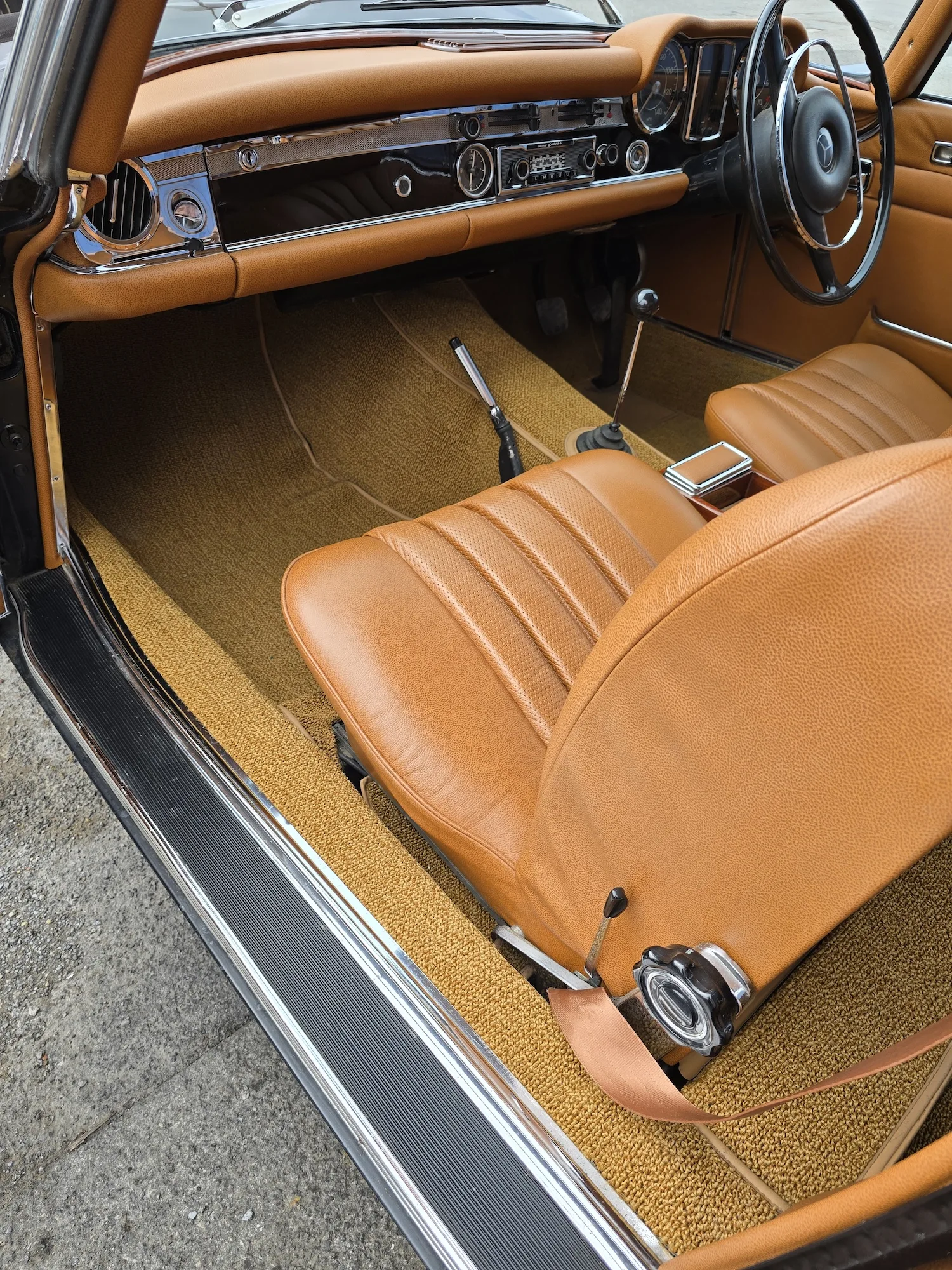
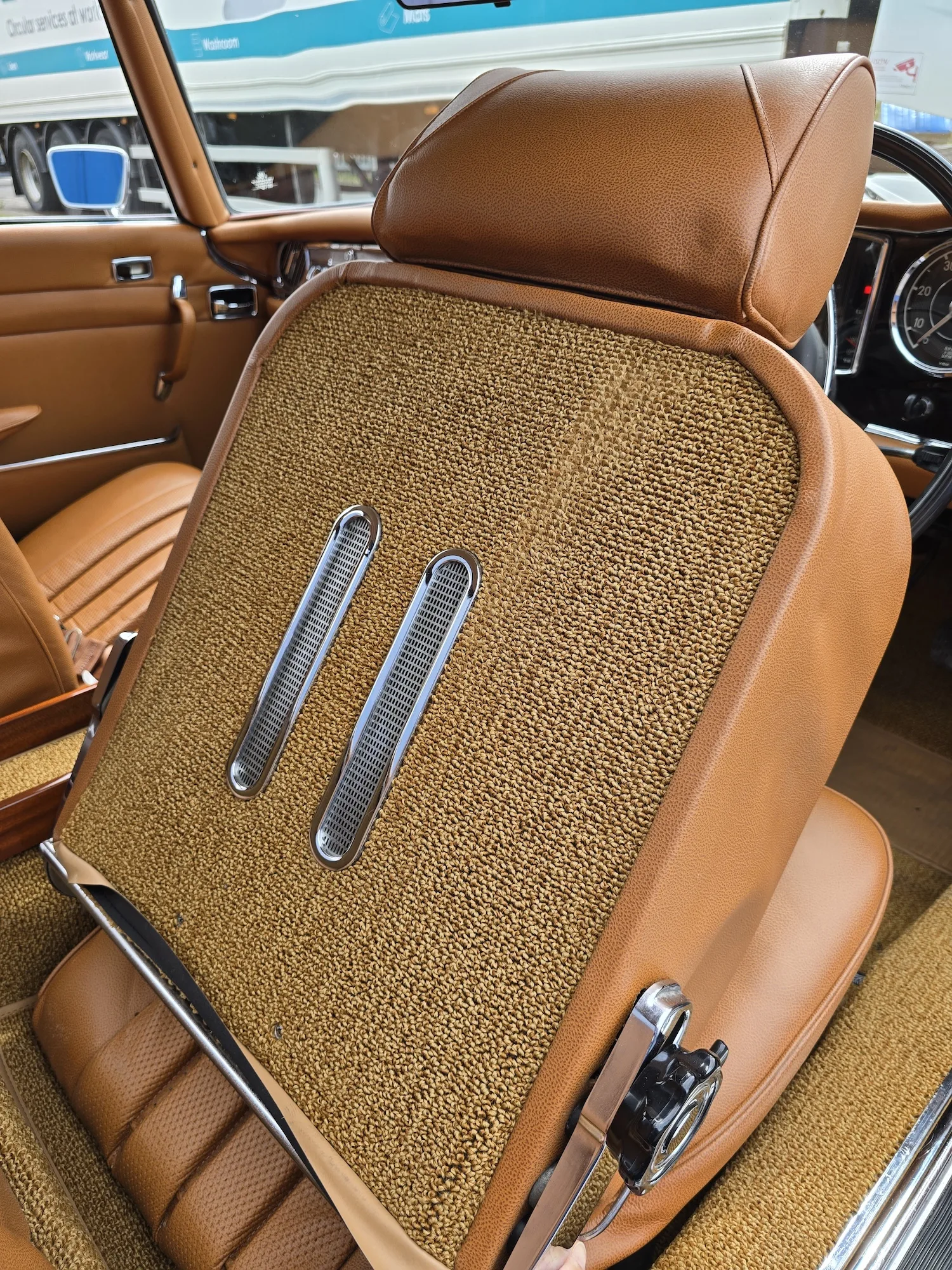
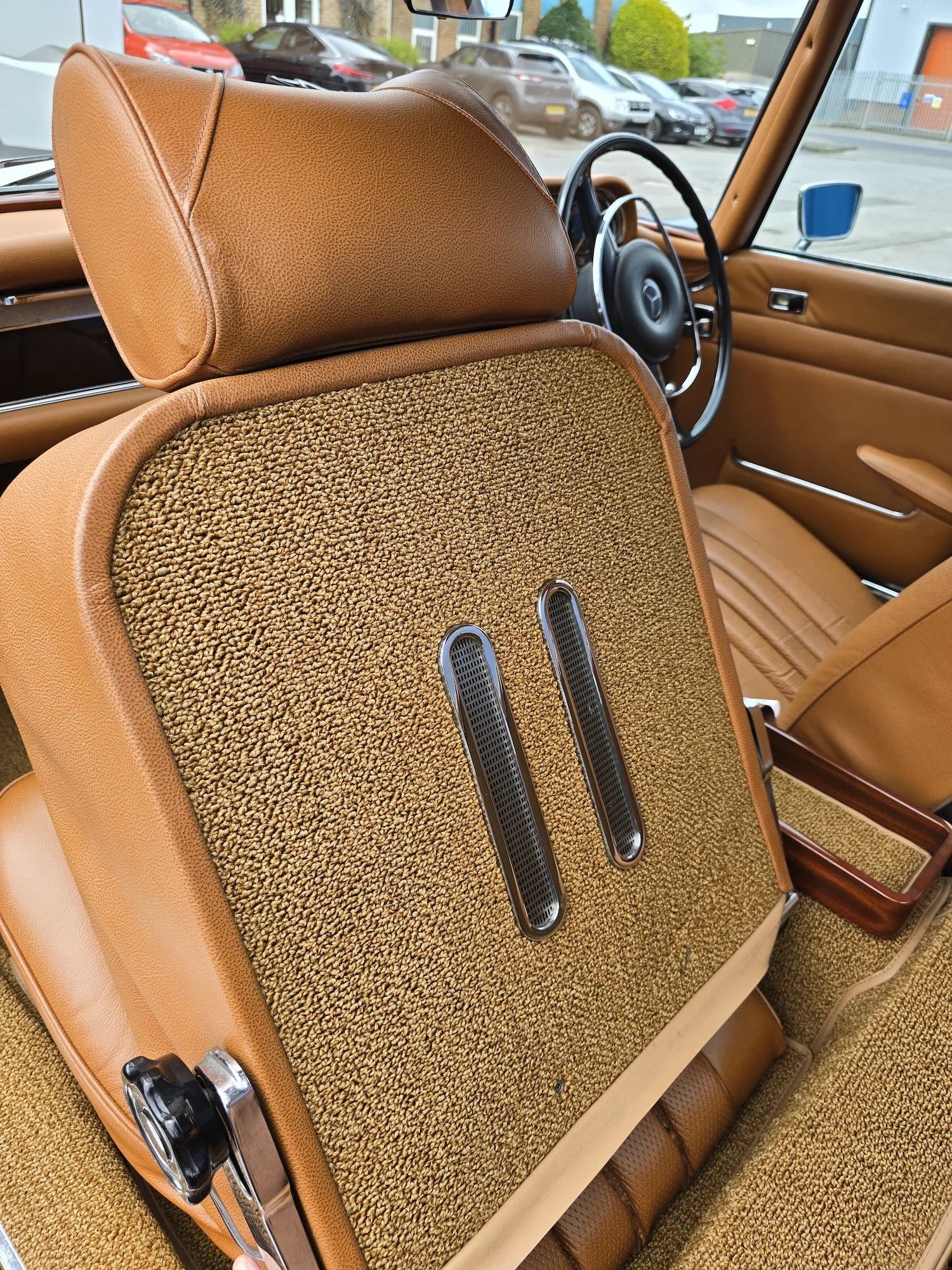
22nd May 2026: A priority list of works to improve the running of the car mechanically and any bodywork repairs is currently being put together.
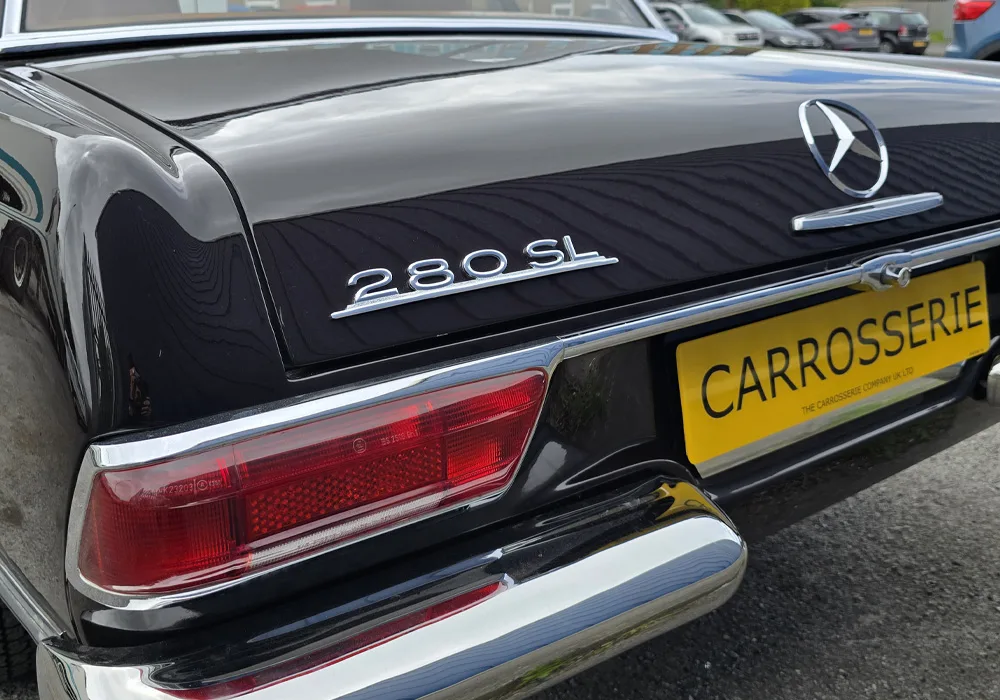
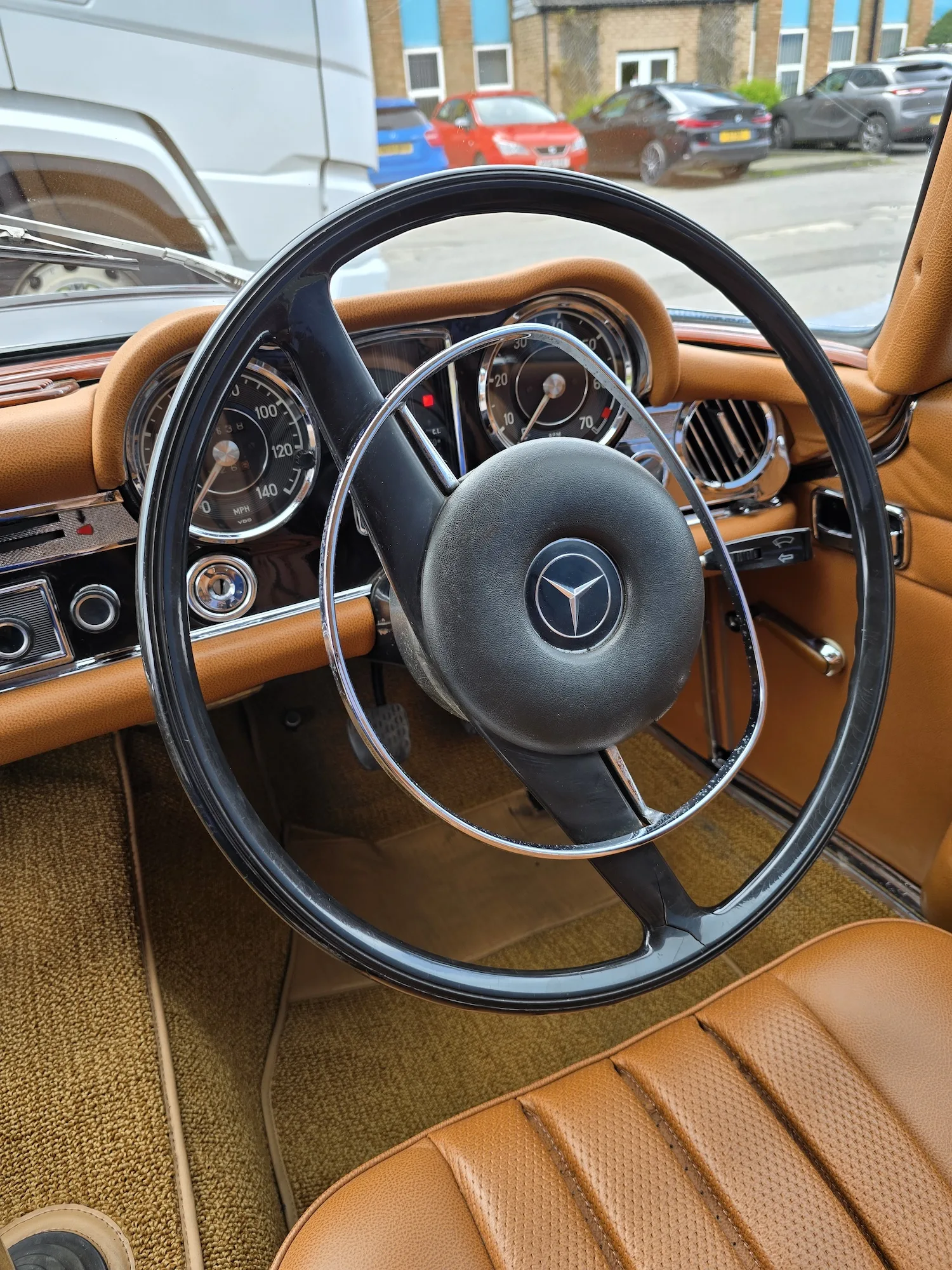
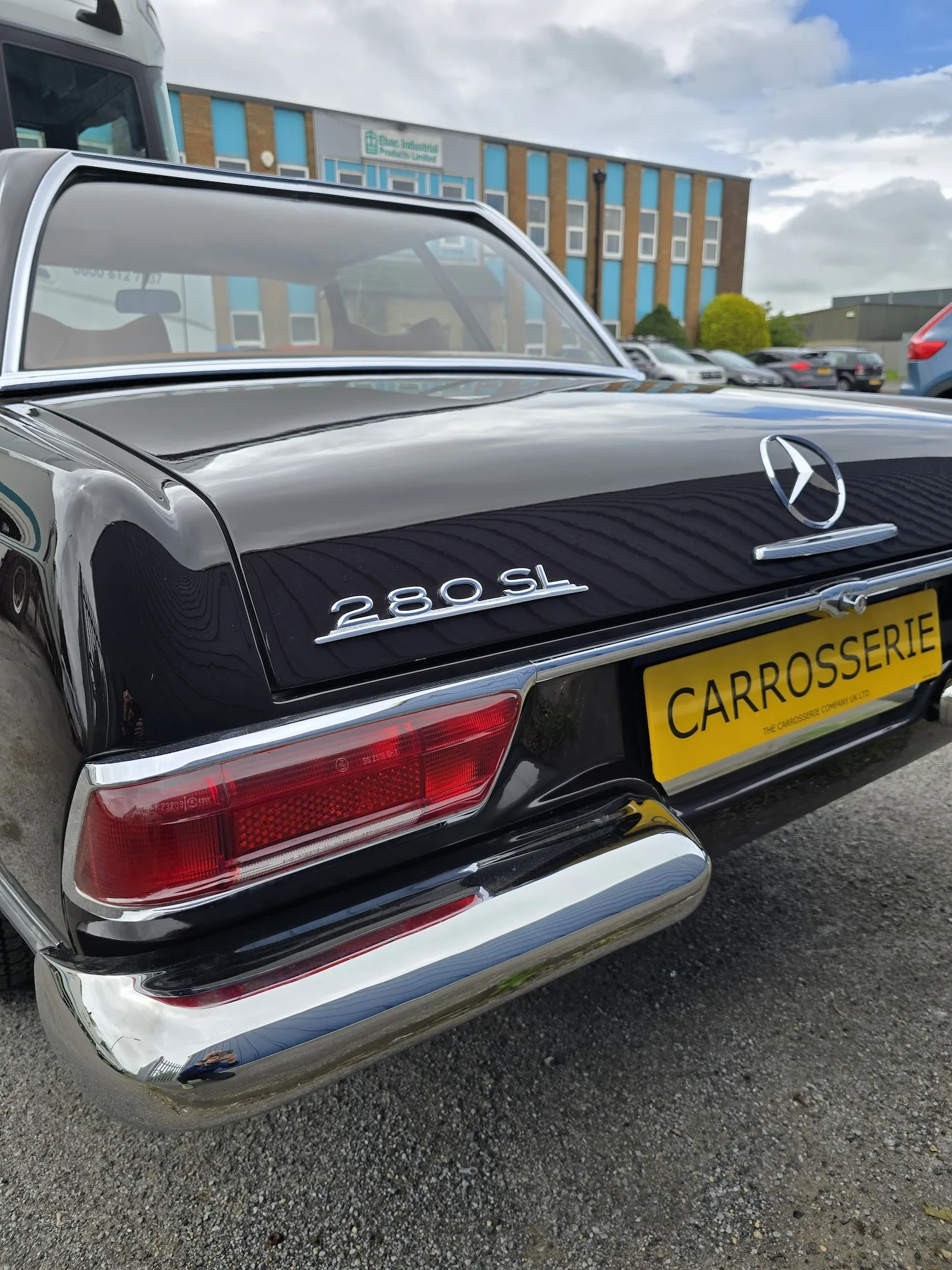
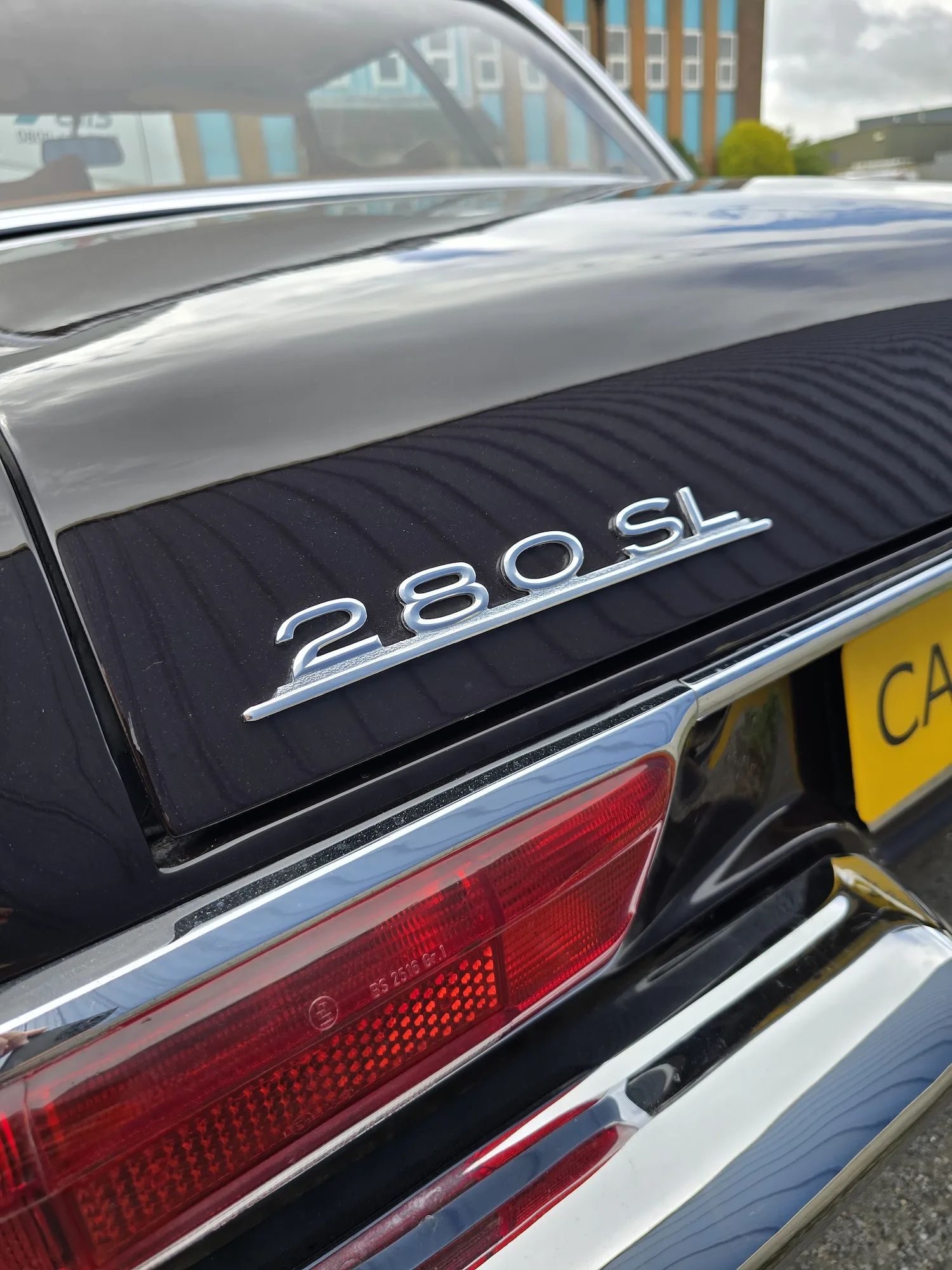
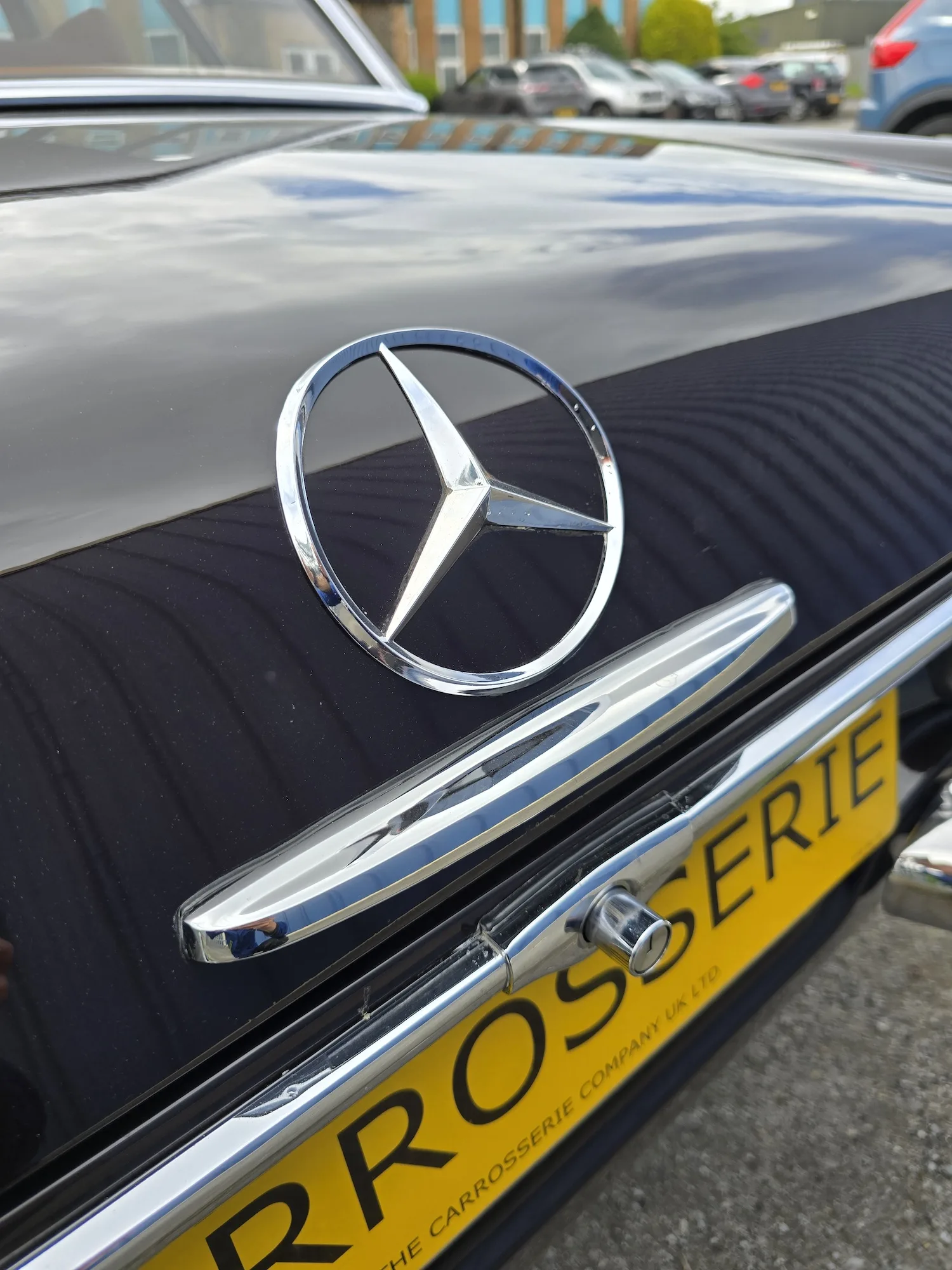
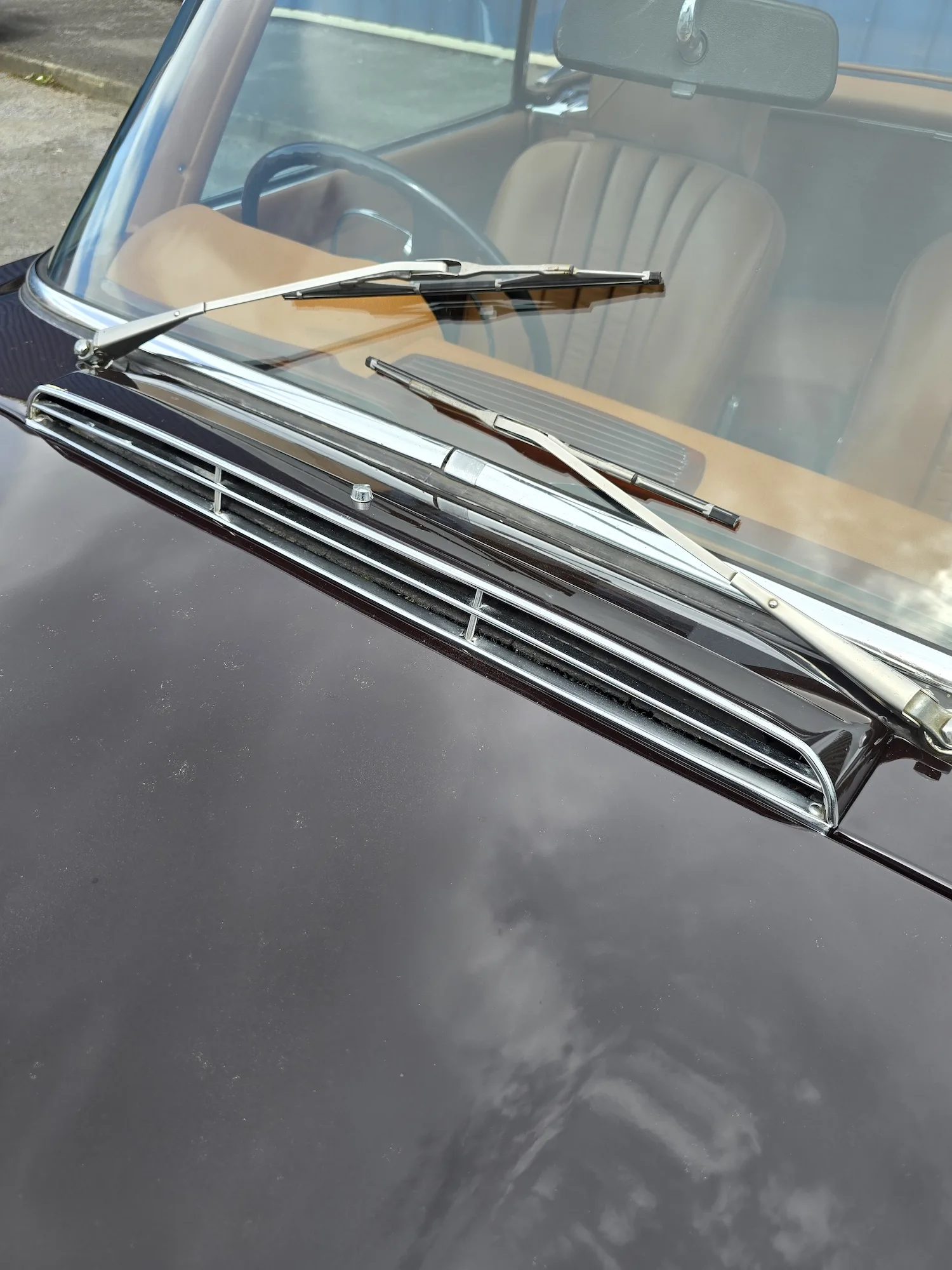
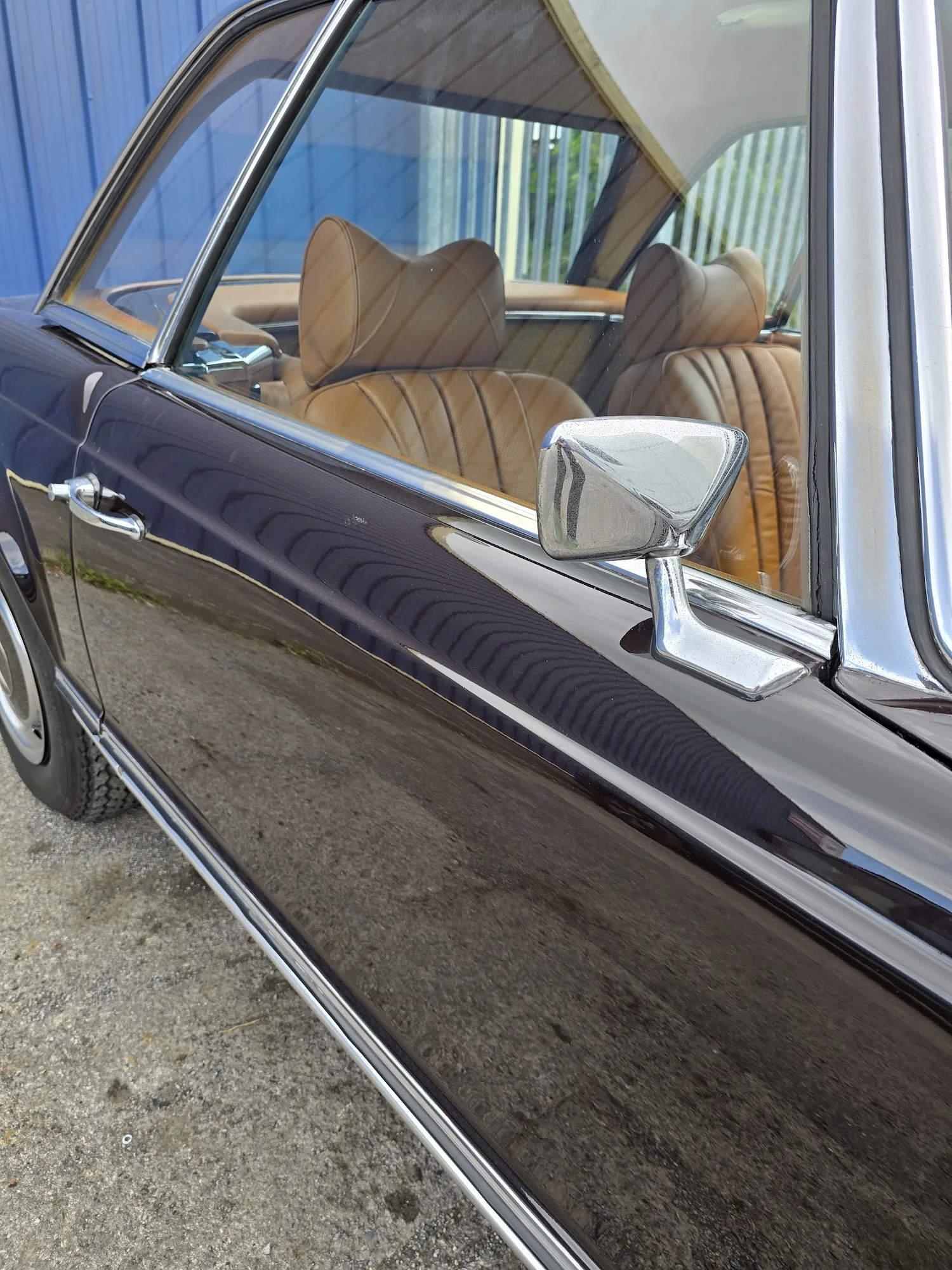
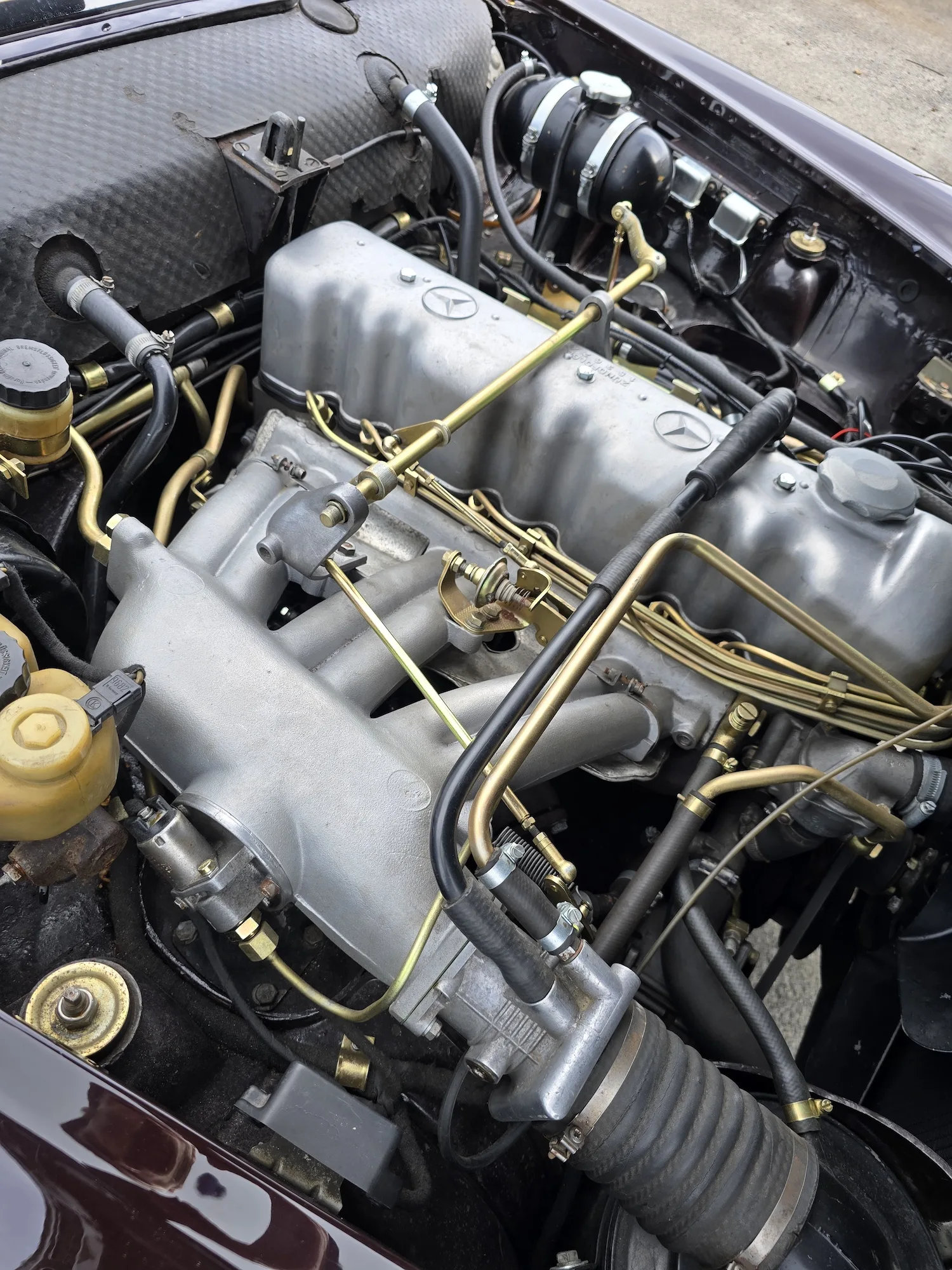
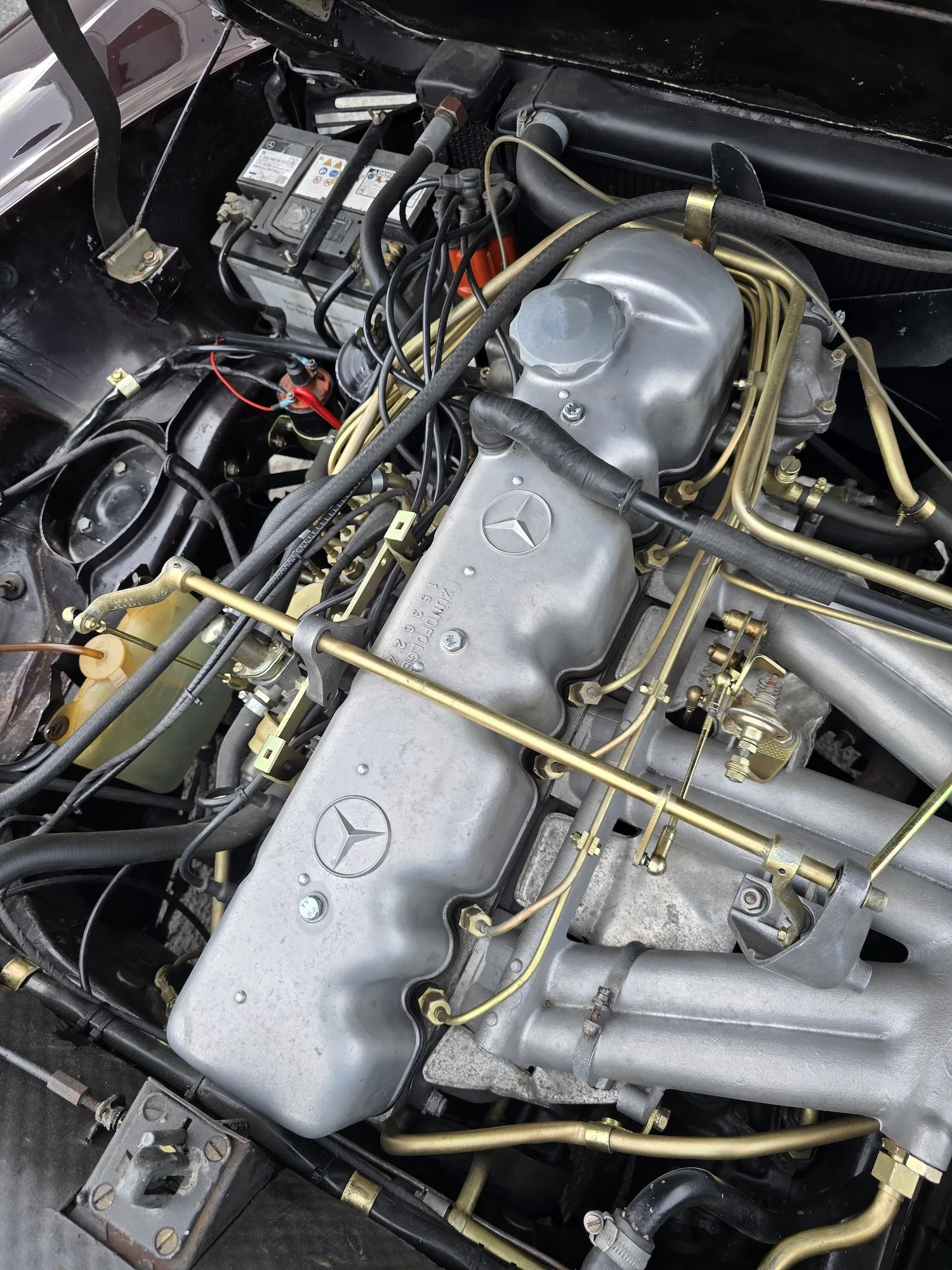
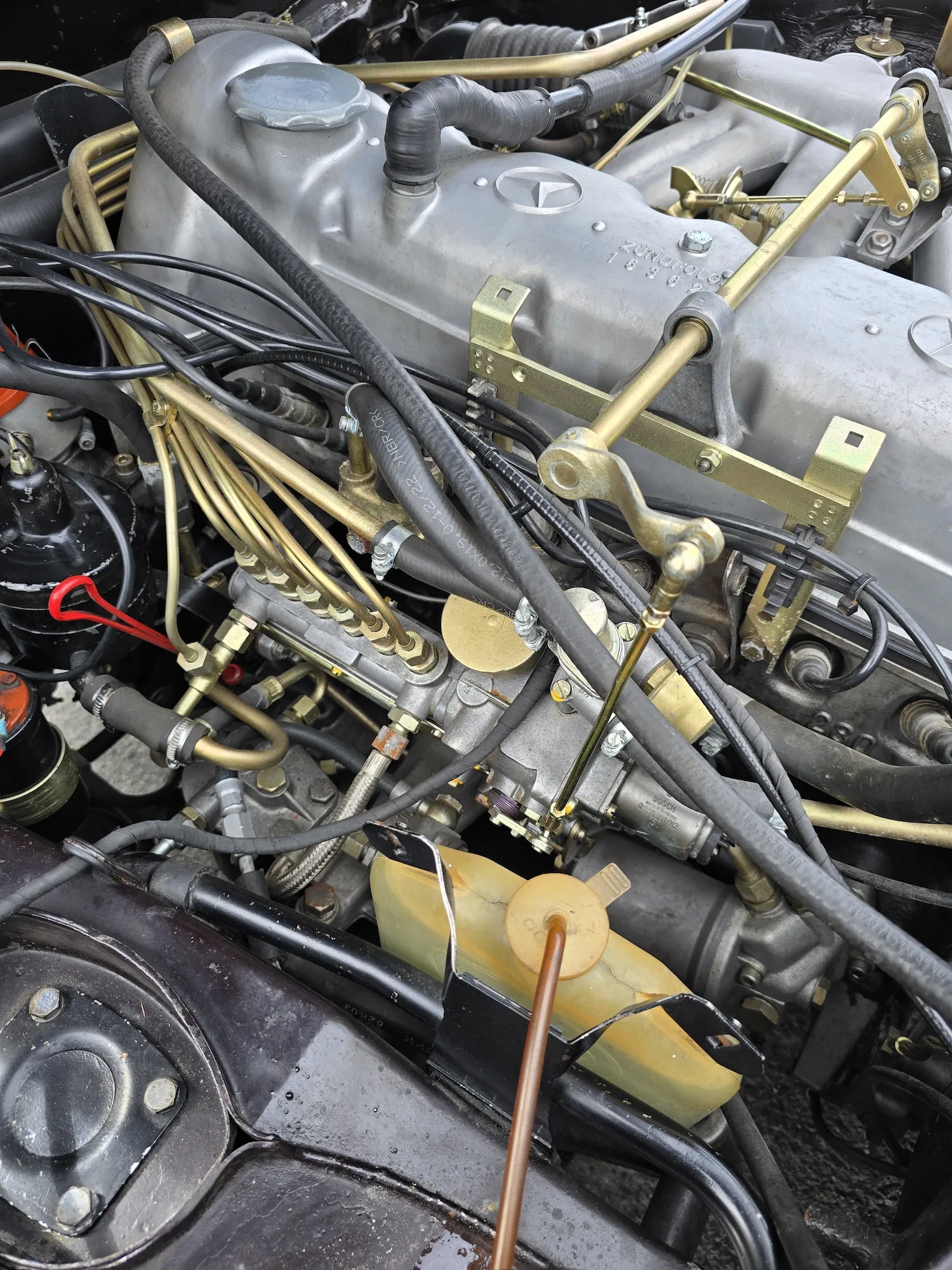
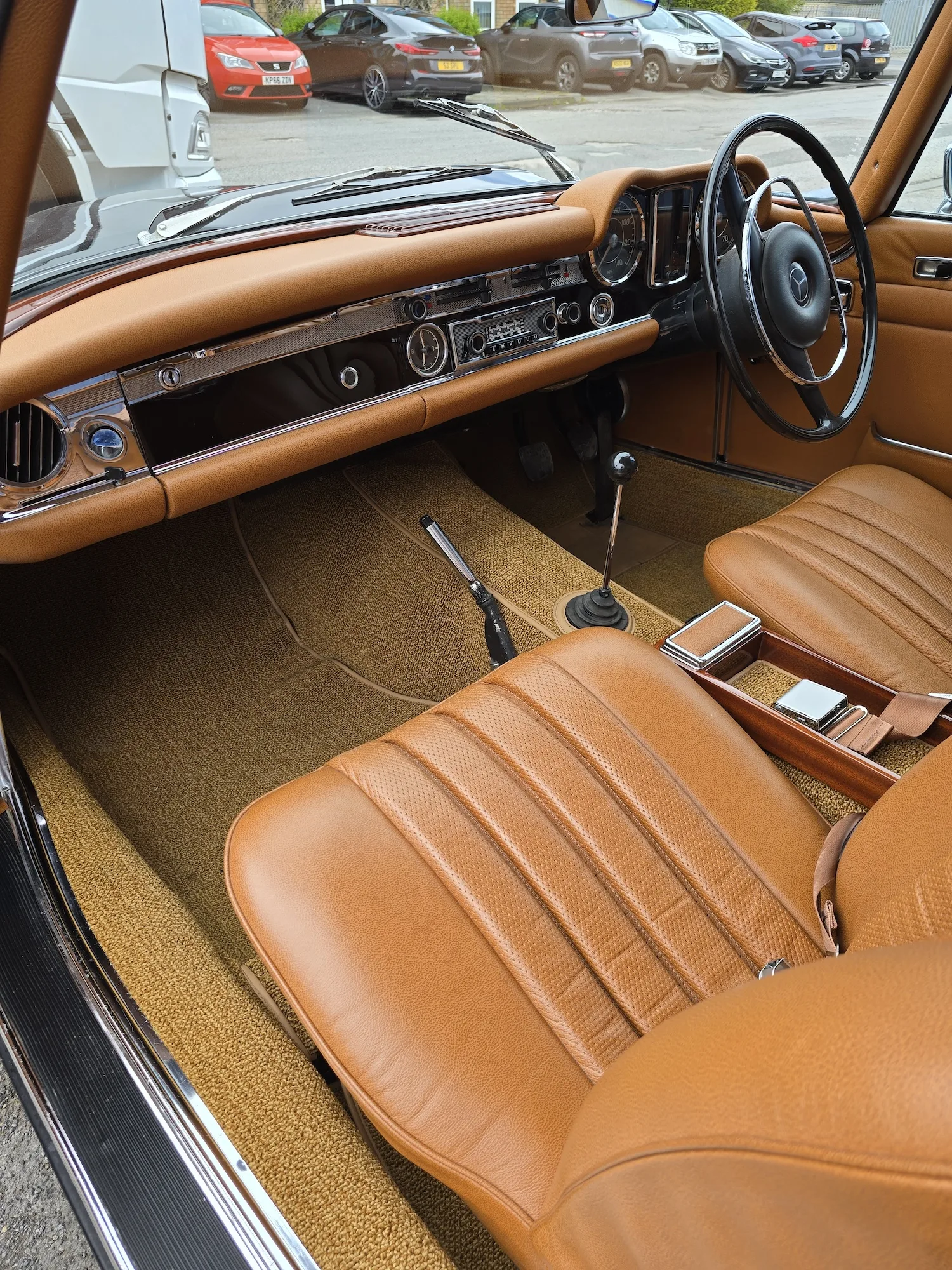
The Mercedes-Benz 280SL “Pagoda” was the final and most developed version of the W113 series, one of Mercedes-Benz’s most admired sports cars of the post-war era. Built between 1967 and 1971, it combined elegant styling, engineering sophistication and everyday usability in a way few rivals could match.
The W113 story began in the early 1960s. Mercedes needed a replacement for both the glamorous but expensive 300SL and the ageing 190SL. The result was a new generation of grand touring roadster designed to be safer, more comfortable and easier to drive than traditional sports cars.
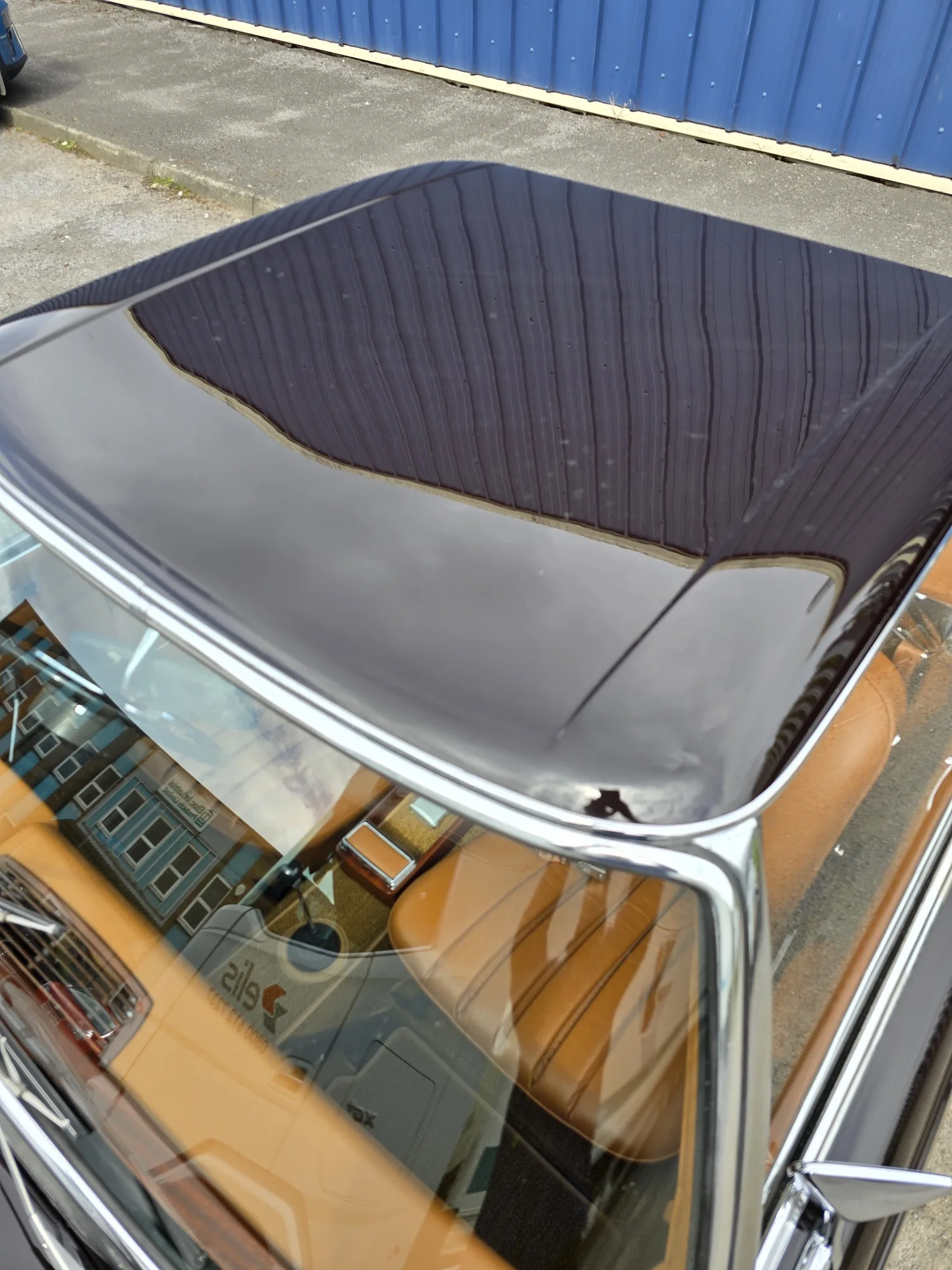
The new model debuted in 1963 as the 230SL. It was designed by Paul Bracq and Béla Barényi, the latter being a pioneer in automotive safety engineering. The car featured clean, restrained lines and a distinctive concave removable hardtop. Because the roof dipped slightly inward in the centre, it resembled the curved roofs of East Asian temples, leading journalists to nickname it the “Pagoda” — a name that has remained ever since.
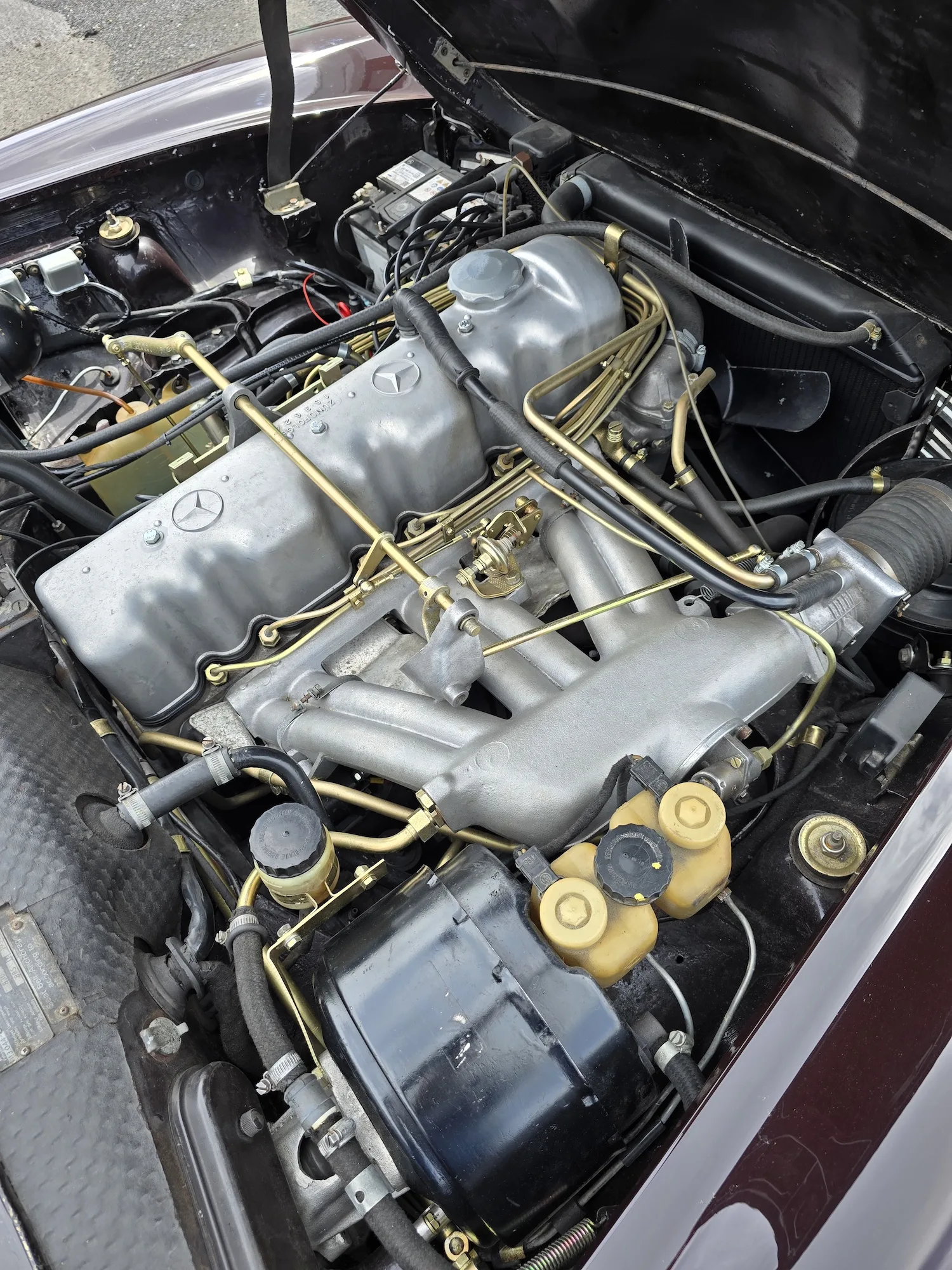
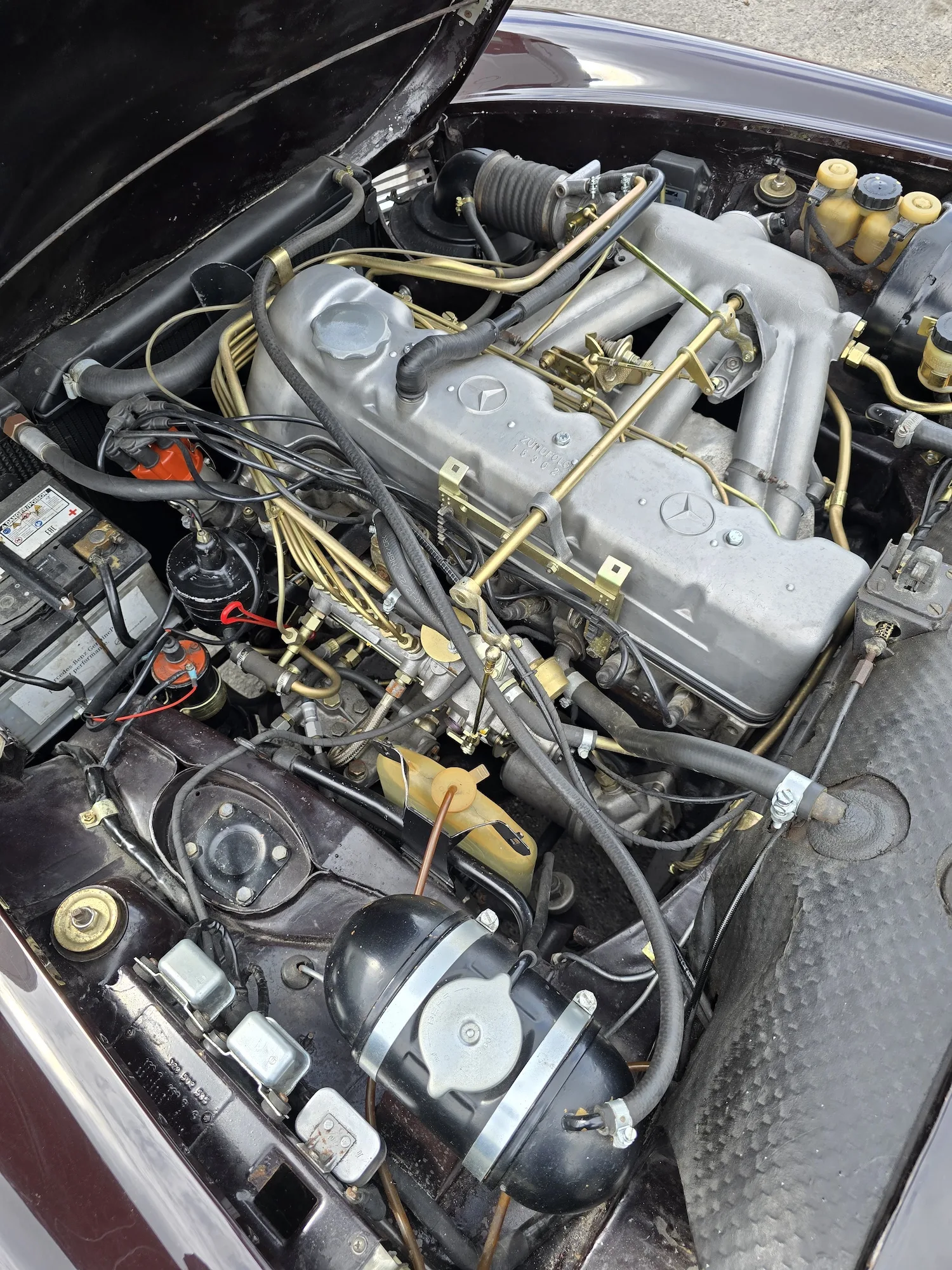
Mechanically, the W113 used a shortened platform derived from Mercedes saloons of the period. It featured independent suspension, disc brakes at the front and fuel injection, making it technically advanced for its time. Unlike many sports cars of the era, it was designed as a refined high-speed touring car rather than a raw racer.
The first 230SL used a 2.3-litre straight-six engine producing around 150 bhp. It offered brisk performance, excellent reliability and impressive long-distance comfort. Buyers could choose a four-speed manual gearbox, an optional automatic transmission or, on early cars, a rare ZF five-speed manual.
In 1967 Mercedes introduced the 250SL. Although produced for only a short period, it bridged the gap between the early and final models. Engine capacity increased to 2.5 litres, bringing more torque and smoother performance, though power output remained broadly similar.
Later in 1967 came the definitive 280SL. Its 2.8-litre fuel-injected straight-six delivered stronger low-speed flexibility and improved refinement, making it the best all-round version of the series. Most surviving Pagodas today are 280SLs because production numbers were significantly higher than earlier variants.
The 280SL became especially popular in the United States, which absorbed the majority of production. American buyers appreciated its blend of prestige, reliability and comfort. Many cars were fitted with automatic gearboxes and optional air conditioning for the US market.
Safety was a major focus throughout the W113’s development. The car featured a rigid passenger cell, crumple zones, padded interior surfaces and innovative steering design intended to reduce injury in a collision. These ideas were far ahead of many contemporaries and reflected Mercedes-Benz’s growing reputation for engineering safety into its vehicles.
Production of the 280SL ended in 1971, when the W113 series was replaced by the larger and more luxurious R107 SL. In total, around 48,000 examples of the 280SL were built, contributing to overall W113 production of roughly 49,000 cars across all versions.
Today, the Pagoda is regarded as one of the most elegant Mercedes-Benz designs ever produced. Values rose dramatically during the classic car boom of the 2010s, particularly for restored or original-condition 280SLs. Enthusiasts value them for their timeless styling, durability and usability; unlike many classics of the period, a well-maintained Pagoda can still be driven comfortably over long distances in modern traffic.
Collectors generally favour cars with original factory colours, matching numbers and documented history. European-specification manual cars are especially sought after, though automatic US-market examples remain plentiful and highly usable.
More than fifty years after production ended, the 280SL Pagoda remains a symbol of understated luxury and engineering excellence — a classic that balances sportiness, elegance and practicality in a uniquely Mercedes-Benz way.



All reviews4.9
 Reviews.io5.0Posted on Reviews.ioSimon Cocking08/09/2026
Verified
Skilled craftsmen producing amazing work. The workshop is a treasure trove of motoring history! Thanks for a great job!Posted on GoogleSteven Parkes12/07/2026Trustindex verifies that the original source of the review is Google.
Steve has helped me through some difficult situations throughout this restoration process. The car I bought was a total rot box, I had no idea. Nicola’s support with my finances has helped me get this car over the line. Don’t look elsewhere if you are serious about doing a restoration properly look no further.Posted on Reviews.ioSean Bellew12/06/2026I recently had corrosion repairs carried out to both front wings on my Porsche 944 and I am extremely pleased with the quality of the workmanship. The repairs involved cutting out the corroded sections and fabricating replacement metalwork rather than simply filling over the affected areas. The standard of fabrication and welding is excellent, with the repairs blending seamlessly into the original panels. The attention to detail is evident throughout the work, and the finished result looks completely in keeping with the car. As an owner of a classic Porsche, preserving originality is important to me, and the repairs have been completed in a way that maintains the character and integrity of the vehicle. The paint finish and panel presentation are superb, and once completed it is virtually impossible to tell where the repairs have been carried out. Overall, the craftsmanship is first-class and the car now looks significantly better than it did before the work was undertaken. If you are looking for high-quality metal fabrication and restoration work on a classic vehicle, I would have no hesitation in recommending them based on the quality of the finished product.Posted on GoogleDavid Kelly15/05/2026Their work looks fantastic. Love the regular blogs.Posted on Reviews.ioMark30/04/2026Excellent service and Neil’s knowledge is second to none. The wealth of experience resolved the issues with the carburettors ensuring I had an uneventful drive home and can now look forward to driving the car on the odd sunny days we call summer. Would recommend Carrosserie without hesitation.Posted on GoogleJohn Lonergan09/03/2026Great service , top quality work , very friendly and helpful , i had a probem with no dipped headlights and a couple of nasty stonechips and despite being very short notice they fitted me in the next day diagnosed the faults and while that was going on the paint guy sorted the stonechips , two hours later all completed . I know these guys will take good care of my classic car and do an excellent job I've used them before . Highly recommended .Posted on Reviews.ioRobert Montague04/03/2026The team at Carrosserie have done an excellent job . Focus on detail and quality of work Fully responsive and engaging the client at all time . I will be giving them a further project and recommend them as a first class service Thank you Steve and the Team, plus of course Neil 😎Posted on Reviews.ioAndrew Whittaker04/10/2025Reference: 1939 Rolls-Royce Wraith – Rewire. I recently received my car back and I am absolutely delighted with their work. The rewiring has been completed to an exceptionally high standard, and it is evident that great skill and care went into the process.Posted on Reviews.ioJ J Beeton02/09/202510 out of 10 perfect restoration work on Jaguar XKR.Posted on Reviews.ioKeith Devonport25/06/2025I found the team at Carrosserie to be friendly and helpful whilst maintaining an organised and professional approach towards the job in hand, they were also able to incorporate extra work I asked for at the eleventh hour. Carrosserie kept to the 'booked in' start date for the work to commence and throughought the work cycle i was presented with photos and videos as the work progressed. I'm very happy with the finished job, thank you and well done Carrosserie.Posted on Reviews.ioGeoff Lowson16/04/2025I took my Citroen 2CV for an assessment for a potential repair. The manager Steve Liversedge was very accommodating and staff were helpful and courteous and very professional in giving their advice.Posted on Reviews.ioIan Carter01/03/2025A big thank you to the team who worked on my 20 year old BMW. The car looks fantastic and the care and attention to detail tackling the rust that was in a most awkward place showed real desire for doing the best job possible. Updates and photographs were given daily as the job progressed. Finally the customer care was second to none, and my job wasn't anything like a serious restoration. Thanks again. IanPosted on Reviews.ioAndrew Pyle13/02/2025Took my Escort XR3i to Carosserie for re-commissioning. Brakes, suspension, springs, shocks, general overhaul - some gaskets,polish etc. All staff very welcoming, professional from office staff to engineers. Took me through the car's inspection - lots of photos of work to be done, progress and work finished. Kept in touch via e-mail throughout project. Not cheap but you get what you pay for with old motors! Good luck with move to new premises.Posted on GooglePaul Simpson08/06/2024I will let the pictures do the talking. Attention to detail is second to none, very knowledgeable and skilled guys here at Carrosserie. All the staff are polite and very professional. Highly recommended.Posted on GoogleJeremy Roff10/05/2024Thanks to all at Carrosserie for managing to make my Jimny look perfect again. A great job.Posted on GooglePhil Sage27/09/2023The work carried out here is like magic, the standard the cars leave is fantastic, the cars they restore are works of art !Posted on GoogleCatherine Lonergan26/02/2023Very Friendly always helpful staffPosted on GoogleNigel Cramp25/06/2022Great friendly and helpful team at Carrosserie. Highly quality work. This is the second time I've used their services. Highly recommended if you want quality restoration or paint work.Posted on GoogleIan Roper26/03/2022Neil who owns the company straight away gave me one of the best buying experiences I have ever had. He was nice to speak with giving me confidence in buying from him from the outset. This continued throughout the buying process with updates on the process of finance that he organised. Because of my working schedule being so hectic and having to juggle many parental duties. We were unable to get over to pick up the car in the week. Despite the company being closed on weekends, Neil went out of his way to meet me on a Saturday afternoon and even showed me around his amazing company. It was so clear to me that this is someone who is genuine, kind and cares about his company and customers in equal amounts. A truly rare thing in this day in age. I wouldn't hesitate to use his company myself in the future and would recommend him to friends and family in a heartbeat.Posted on GoogleJohn Royce16/02/2022Outstanding choice of cars, superb restoration facilities from a very professional team. Highly recommended.Verified by TrustindexTrustindex verified badge is the Universal Symbol of Trust. Only the greatest companies can get the verified badge who has a review score above 4.5, based on customer reviews over the past 12 months. Read more
Are you ready to start your restoration journey with us?
St Helen Way
St Helen Industrial Estate
Bishop Auckland
DL14 9AZ
Tel: 01833 630 011 / Mob: 07973 616 478

By signing up, you agree to the Carrosserie Privacy Policy